
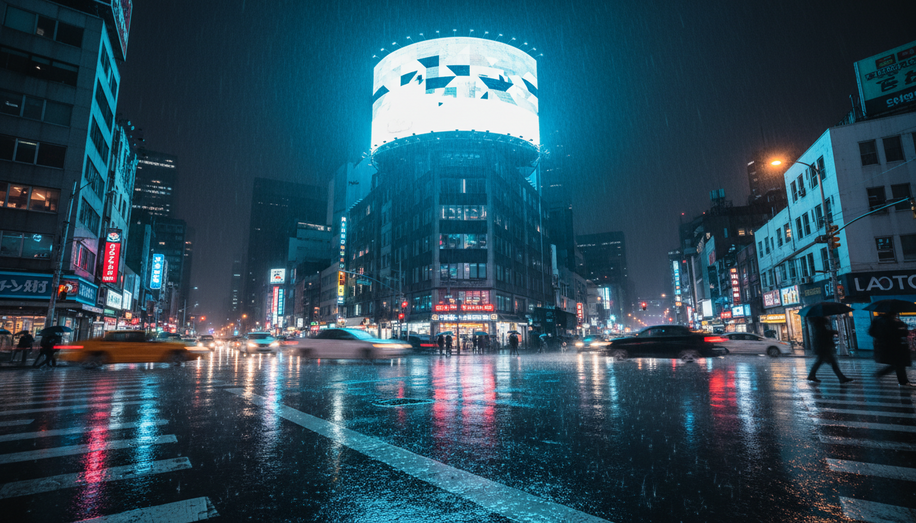

In an era dominated by algorithmic feeds and fleeting digital scrolls, classic static billboards and posters endure as unyielding sentinels of the advertising world, commanding attention where screens cannot reach. These large-format out-of-home (OOH) staples—rooted in simplicity and scale—continue to outperform many digital counterparts by delivering unavoidable visibility in the physical spaces where people live, commute, and shop. Far from relics, they thrive amid digital saturation, offering strategic edges in reach, recall, and cost efficiency that algorithms increasingly struggle to match.
The core strength of traditional billboards lies in their brute-force presence. Positioned along highways, in bustling city centers, and at high-traffic intersections, they intercept audiences without requiring opt-ins, clicks, or data consents. Research from the Out of Home Advertising Association of America reveals that 80% of consumers notice roadside OOH ads weekly, with nearly half spotting them daily, fostering immediate brand awareness among commuters and travelers. Unlike digital ads battling ad blockers and banner blindness, static billboards demand passive engagement: a driver’s glance, a pedestrian’s pause. Nike’s New York City campaign exemplifies this, pairing a static seasonal billboard with nearby digital elements to bridge broad exposure and local resonance, proving classics can anchor hybrid strategies.
Consumer recall further cements their dominance. Bold visuals, concise headlines, and emotional imagery etch messages into memory far longer than ephemeral online content. Industry data shows OOH, including billboards, achieves 38% to 86% effectiveness in provoking responses, with static formats excelling in message retention due to their unhurried absorption. Charity: Water’s poignant posters, featuring stark images of water scarcity alongside impact stats, lingered in viewers’ minds days later, driving donations through sheer emotional pull. Nielsen studies reinforce this, noting 60% recall for billboard ads viewed within the past month, a metric digital channels envy amid shrinking attention spans.
Strategic geographic targeting amplifies their precision without digital invasiveness. Advertisers select placements near target zones—residential hotspots, retail corridors, or event venues—blending mass reach with local relevance. A Dallas real estate firm nailed this by erecting billboards proclaiming “2 miles ahead” toward prime listings, converting drive-by views into qualified leads. This hyper-local focus suits small businesses especially, where 71% of owners deem physical tactics like billboards essential for customer connections, outpacing algorithm-dependent alternatives.
Cost dynamics seal the case for classics. Billboards offer fixed-price, long-term exposure: one placement yields thousands of daily impressions at a CPM of $1 to $6, starkly lower than TV or digital display’s $15-plus. OOH ad spend reflects this appeal, climbing 9.7% in 2023 with digital variants up 12.2%, signaling sustained investor confidence. Globally, the billboard and outdoor market hit $59.18 billion in 2026, eyeing $68.02 billion by 2030 at a 3.5% CAGR, while U.S. projections peg OOH at $9.89 billion amid budget shifts from fatigued digital platforms. For budget-conscious campaigns, this translates to stable branding without endless pay-per-click churn.
Yet traditional formats shine brightest when integrated with digital ecosystems, not in isolation. They provide tangible “proof of existence” that bolsters online trust—consumers spotting a billboard often pivot to searches or social, lifting digital metrics. Chipotle’s QR-embedded billboards, syncing meal deals to time-of-day, track scans and foot traffic in real time, merging static reliability with measurable ROI. Posters extend this indoors, dominating transit hubs and urban walls where dwell time allows deeper engagement, complementing DOOH’s dynamism without its tech vulnerabilities.
Digital’s pitfalls—rising CPMs from auction wars, eroding trust via fraud, and fragmented feeds—only heighten classics’ allure. Social saturation and TV splintering push brands toward OOH’s authenticity: 26% of consumers discovered local businesses via print or billboards in recent years, with 27% visiting post-exposure. Challenges persist—limited granular targeting, placement risks, or suboptimal creative—but savvy planners mitigate these via data-driven site selection and bold, high-contrast designs.
Ultimately, static billboards and posters dominate by reclaiming attention in a screen-weary world. They deliver broad, believable impact at scale, fostering emotional bonds and real-world actions that pixels alone cannot replicate. As 2026 unfolds, with OOH surging amid digital disillusionment, these timeless formats remind advertisers: sometimes, the most powerful message is the one impossible to scroll past.