
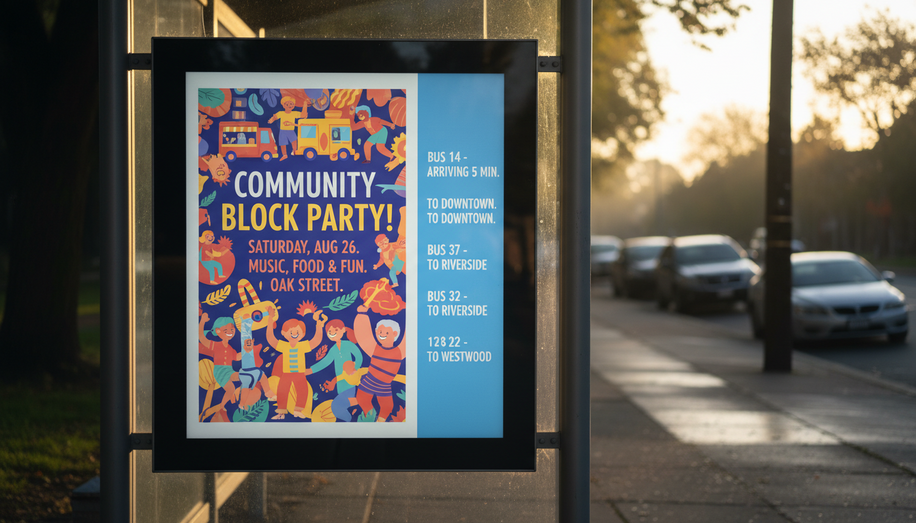

In the bustling heart of urban neighborhoods, where daily life unfolds in corner cafes, school districts, and local festivals, out-of-home (OOH) advertising is evolving from mere visibility to a seamless thread in the community tapestry. Hyperlocal OOH campaigns transcend broad demographic targeting by embedding brands directly into the rhythms of neighborhoods, fostering genuine engagement and enduring loyalty through precision, relevance, and cultural resonance.
This shift leverages advanced technologies like geofencing and addressable geo-targeting to deliver messages at the street level, where consumers live, shop, and connect. Platforms such as Simpli.fi enable advertisers to draw virtual boundaries around specific radii—say, walking distance from a retail store—or key landmarks like competitor sites, events, or municipalities, serving digital OOH (DOOH) ads to mobile users even 30 days after exposure. Soofa highlights how this hyperlocalization spikes engagement by mirroring local culture; ads tied to neighborhood events prompt shares on social media and heartfelt discussions, turning passive viewers into active advocates. The result? A sense of belonging that elevates brand recall and drives foot traffic, as Nielsen data underscores with OOH viewers making 68% of purchase decisions while out and about.
Consider the power of venue-specific placements in community hubs—public parks, grocery stores, transit centers, or clinic lobbies—where extended dwell time amplifies impact. PlaceBased Media reports that such local venue OOH achieves up to 20% higher recall than generic roadside billboards, bolstered by an inherent trust factor: a health message in a pharmacy feels authentic, not intrusive. True Impact Media emphasizes integrating mobile tech here, capitalizing on the 130% surge in “near me” searches over the past decade; OOH near high-traffic spots pairs with proximity-based digital triggers to guide consumers straight to stores. This omnichannel weave—OOH prompting a smartphone scan, followed by personalized offers—creates frictionless paths to loyalty.
Strategies for deep integration start with storytelling rooted in the locale. Billups advises featuring hyperlocal narratives: testimonials from neighborhood residents, nods to nearby events, or shoutouts to community employees, much like Postmates’ campaigns that spotlighted local eateries alongside their delivery service. If a brand hails from the area, weaving in its origin story—milestones tied to familiar streets—can snag local media attention and humanize the pitch. Crimtan’s research on top OOH campaigns shows a 38% uplift in smartphone brand actions, with 57% occurring within two days of exposure, proving that geo-paired digital extensions, like display ads mirroring billboard postcodes, deepen this connection.
Scaling these efforts while staying community-centric demands data-driven curation. Simpli.fi’s addressable geo-fencing harnesses first-party CRM lists or lookalike audiences to target households with tailored loyalty offers, attributing foot traffic lifts precisely. Pair this with event calendars—geofencing festivals or sports venues—for timely promotions that feel serendipitous, not salesy. Billups pushes integrated campaigns, directing OOH viewers to geo-specific landing pages brimming with area-relevant perks, bridging offline buzz to online conversion. For DOOH, dynamic content swaps based on real-time triggers, like weather or traffic, keeps messaging fresh and neighborhood-responsive.
The loyalty payoff is tangible. Hyperlocal OOH’s cost-efficiency stems from narrowed focus: resources zero in on high-value ZIP codes or demographics via CTV overlays like ZTV, maximizing ROI without waste. True Impact notes personalized in-store experiences follow, as ads attuned to local habits—think seasonal produce pushes near farmers’ markets—build repeat visits. Out of Home Advertising Association of America studies reveal 2.5 times recall in waiting zones, translating to stronger emotional bonds and word-of-mouth amplification. Brands like Waitrose amplify this by syncing OOH with hyperlocal digital display, ensuring consistent reinforcement across touchpoints.
Challenges persist, from data privacy to creative agility, but the street-level advantage endures. OOH’s physical presence commands attention amid digital fatigue, positioning brands as neighborhood fixtures rather than outsiders. Wilkins Media underscores its flexibility, from state-wide reaches to corner-specific blasts. Forward-thinking advertisers prioritize SEO-optimized content in hyperlocal ads, anticipating post-exposure searches.
Ultimately, hyperlocal OOH weaves brands into community fabric by prioritizing relevance over reach. When a coffee chain geofences a school district with parent-tailored perks or a retailer celebrates block parties via DOOH, loyalty blooms organically. This isn’t transient targeting—it’s enduring integration, where brands become as familiar as the local park bench, sustaining engagement long after the campaign fades.
Effectively navigating this nuanced landscape of hyperlocal OOH demands precise targeting and verifiable impact. Blindspot offers advanced location intelligence and audience analytics to pinpoint the most relevant community touchpoints, ensuring OOH campaigns resonate deeply with local residents. Coupled with programmatic DOOH management for dynamic content and robust ROI measurement, Blindspot empowers brands to seamlessly integrate into neighborhood rhythms, fostering enduring loyalty and attributing true business value. Learn more at https://seeblindspot.com/