
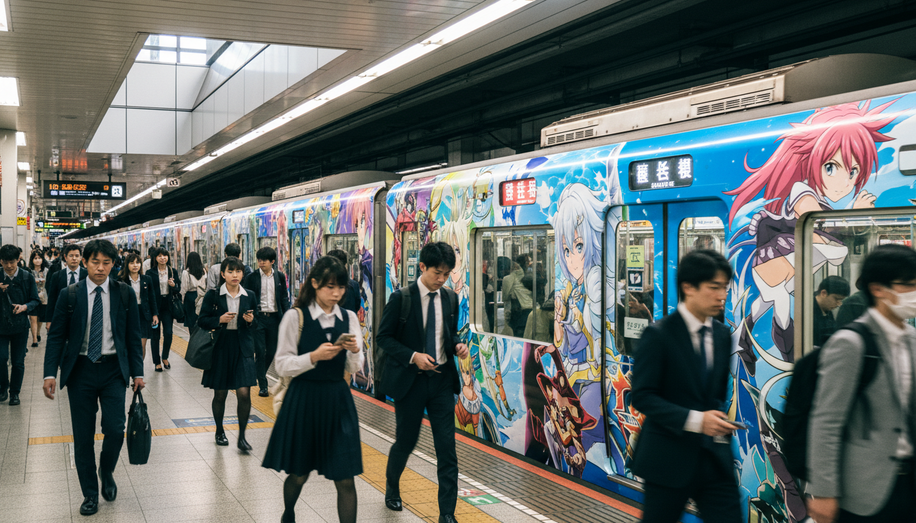

Transit advertising has emerged as one of the most resilient and effective channels in the modern marketing mix, commanding unprecedented attention from brands seeking to engage consumers in real-world, high-attention moments. As urbanization accelerates and commute times lengthen, the moving canvas of buses, trains, and transit stations has become far more than a supporting medium—it is now a core pillar of brand visibility for companies determined to cut through digital fragmentation.
The fundamental appeal of transit media lies in its unparalleled ability to reach mobile audiences during moments of genuine engagement. Unlike digital advertising competing for fleeting attention in saturated online environments, transit ads place brands directly into daily routines, delivering repeated exposure in low-fatigue settings. A commuter boarding a train or waiting at a bus stop faces limited distractions, creating an environment where creative messaging can resonate powerfully.
The sophistication of transit advertising has evolved dramatically. Brands are no longer planning campaigns around static demographics alone; instead, they are mapping strategies to movement patterns themselves. By leveraging route data, dwell time analytics, and city traffic flows, advertisers can deploy taxi fleet advertisements strategically across business districts, airports, and premium residential zones. Bus advertisements align with high-recall corridors—office routes, college zones, shopping clusters—ensuring maximum relevance to target audiences at precisely the right locations.
The creative canvas itself has expanded considerably. Full cab wraps and high-impact taxi advertising deliver city-wide exposure with strong brand recall, while partial cab branding offers a cost-effective alternative for regional or hyperlocal campaigns. Bus advertising has undergone a strategic transformation, moving beyond mass-only thinking to embrace route-specific targeting, city-zone segmentation, and time-based exposure planning. Interior transit ads, station takeovers, and wraparound formats on trains create immersive brand experiences that occupy physical space in ways digital media cannot replicate.
What distinguishes contemporary transit advertising is the integration of measurability and data transparency. Brands now demand visibility into campaign execution and outcomes across all transport advertising formats. This shift reflects a broader industry evolution where transit media is becoming smarter, not merely bigger. The ability to track performance metrics, understand audience behavior, and optimize placements in real time has elevated transit from a reach-focused medium to a precision instrument.
The creative demands of transit advertising require a distinct approach. Designing for moving vehicles and transit stations demands bold visuals, short messaging, and high contrast—elements that register with audiences in seconds rather than sustained viewing periods. A successful transit campaign must tell its story immediately, with creativity sharp enough to stop passersby in their tracks. This constraint has paradoxically sparked innovation, pushing agencies and brands to distill messaging to its essence while maximizing visual impact.
The market trajectory underscores this momentum. The global transit advertising segment generated USD 3,962.9 million in revenue in 2025 and is projected to reach USD 6,523.4 million by 2033. This growth reflects both advertiser confidence and the medium’s proven effectiveness in building awareness and driving consumer behavior.
Station takeovers represent another frontier, transforming waiting areas and transit hubs into branded environments that create context-rich experiences. These installations move beyond static imagery to create memorable moments that commuters discuss and share, amplifying reach beyond the physical footprint.
The future of transit advertising lies in the convergence of creativity, data intelligence, and urban mobility. Brands that understand movement patterns, design for the realities of transit environments, and demand measurable outcomes will leverage these moving canvases most effectively. As cities densify and consumer attention fragments further, transit media offers something increasingly rare in modern marketing: consistent, high-attention exposure in the moments that matter most.