
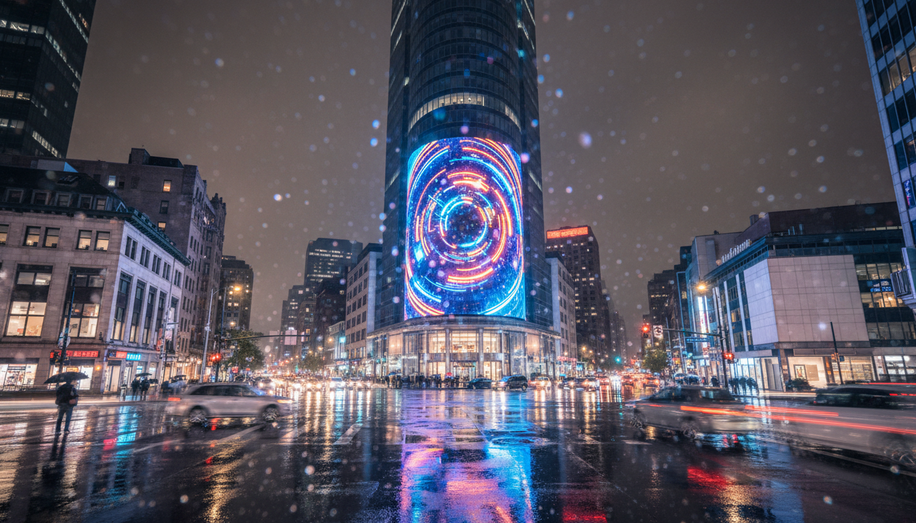

In the bustling arteries of urban life, where billboards loom over highways and pedestrians weave through city streets, artificial intelligence is quietly revolutionizing out-of-home (OOH) advertising. No longer reliant on gut instinct or outdated traffic counts, advertisers now harness AI to dissect massive datasets—drawing from mobile geolocation, satellite imagery, social media signals, and real-time traffic feeds—to predict pedestrian flows, vehicular surges, and demographic clusters with uncanny precision. This audience amplification transforms static billboards into dynamic engines of reach, pinpointing the optimal spots for maximum impact and turning every impression into a calculated strike.
At its core, AI’s power lies in predictive analytics, which sifts through historical patterns and live variables to forecast where eyes will land. Machine learning algorithms crunch data on foot traffic, weather fluctuations, time-of-day rhythms, and even nearby events, dynamically recommending billboard placements that align with audience movement. For instance, platforms like those from StreetMetrics analyze GPS traces from mobile devices and Department of Transportation feeds to model peak impression windows, revealing not just how many people pass a site but who they are—young professionals rushing to offices at 8 a.m. or families heading to weekend markets. This shifts OOH from broad-stroke coverage to hyper-targeted precision, where a fitness brand’s ad might intensify near running trails during evening jogs, boosting exposure by factors previously unimaginable.
Demographic concentration adds another layer of sophistication. AI cross-references location intelligence with psychographic profiles, income levels, and behavioral data to map audience makeup around specific sites. Tools from companies like Placer.ai enable advertisers to segment trade areas, identifying zip codes overrepresented by high-intent consumers—say, millennials with disposable income clustering near trendy cafes or affluent suburbs with elevated spending on luxury goods. Without needing a client’s proprietary CRM data, agencies layer this with public sources like social media check-ins and street-view imagery to flag obstructions, such as overgrown tree branches blocking a digital out-of-home (DOOH) screen, and reroute campaigns accordingly. The result? Eliminated waste in low-receptivity neighborhoods and amplified resonance in hot zones, as one direct mail firm discovered when Placer.ai data refined segments, sparking record coupon redemptions.
Real-time adaptability elevates this further, especially in DOOH’s programmable ecosystem. AI monitors live conditions—subway delays, traffic jams, heatwaves—and triggers content swaps on the fly. PODS, a storage and moving company, exemplified this with a roving digital billboard powered by Google’s Gemini AI, which tailored messages to neighborhood specifics, weather, and transit hiccups, fueling a 60% spike in website visits. Similarly, StackAdapt’s algorithms forecast optimal slots by blending historical trends with externalities like rush-hour snarls, then adjust budgets to high-performing placements while integrating DOOH seamlessly with online channels for unified attribution. This cross-channel synergy tracks exposure to downstream actions, like foot traffic lifts or conversions, proving ROI in ways static metrics never could.
For media operators, the efficiencies are profound. Predictive models streamline inventory management, anticipating demand surges based on past performance and externalities, allowing smarter allocation of static and digital faces. Brands gain foresight into campaign resonance, with AI conducting rapid A/B tests—tweaking logo sizes or messaging variants across screens and measuring lifts in seconds, as Billups did to sharpen ad performance mid-flight. Nearly two decades of layered data, from satellite snaps to advertiser uploads, informs these decisions, outpacing human analysis.
Yet challenges persist. Current audience estimates often lean on “impression multipliers”—rolling averages from third-party geo-services lacking true real-time pulse—which AI promises to supplant with granular, behaviorally rich updates. Critics note that while predictive traffic analytics shine today, broader AI tools for creative generation remain hype-heavy, with genuine value concentrated in placement and forecasting. Privacy concerns also loom as geodata proliferates, demanding ethical handling to sustain trust.
As cities densify and consumer paths fragment, AI-driven audience amplification cements OOH’s resurgence. What was once a blunt instrument now wields surgical accuracy, forecasting not just traffic but intent, ensuring ads don’t just appear—they connect. Advertisers who master this data alchemy will dominate the visual landscape, proving that in the age of intelligence, the best placements aren’t found; they’re predicted.