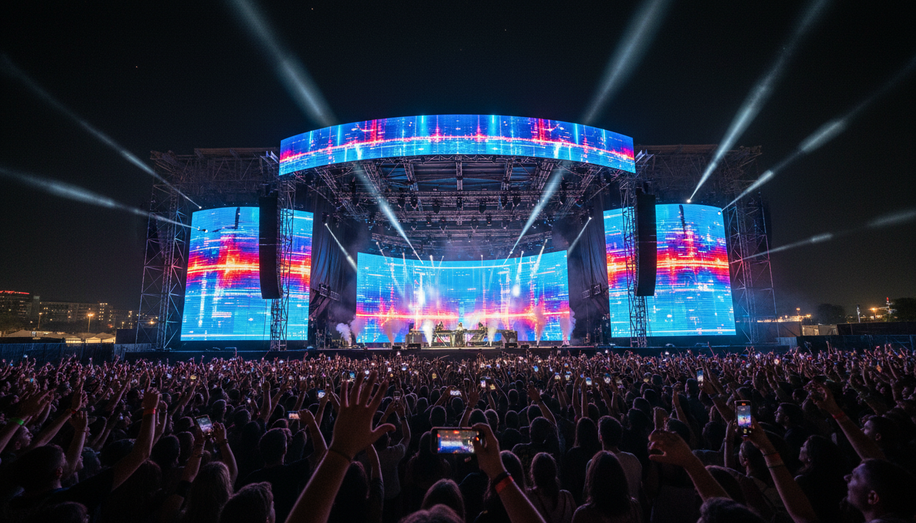

In an era where consumer attention fragments across screens and speakers, out-of-home (OOH) advertising is reclaiming its prominence by syncing with the invisible power of audio—radio spots, podcasts, and streaming services—to forge unbreakable brand recall. This integration transforms static visuals into dynamic narratives, layering sight with sound to amplify messages at every turn, whether a commuter glances at a billboard or tunes into a podcast during rush hour. Brands that master this synergy don’t just advertise; they orchestrate experiences that linger in the mind long after the ad fades.
The logic is straightforward: OOH captures eyes in high-traffic zones where people are primed for environmental cues, while audio infiltrates ears during private moments like drives or workouts. Together, they create a multi-sensory loop. Programmatic technology supercharges this pairing, enabling audio OOH—speakers embedded in billboards or directional sound beams—to target audiences by location, demographics, and even time of day. For instance, advertisers can trigger audio messages near workplaces or retail hubs, personalizing content with custom playlists or promotions tied to popular artists. A MAGNA study underscores the potency: listeners are 35% more receptive to audio ads than visual ones, as sound forges emotional connections that visuals alone can’t match.
Real-world campaigns illustrate the payoff. Ogilvy’s promotion for All Good Fair-Trade Bananas in New Zealand supermarkets deployed Audio Spotlight directional speakers, beaming whispers directly to shoppers standing before the fruit stand—like a conscience urging purchase. The sound, audible only to those in the beam, mimicked an internal voice, driving sales up over 130%. Similarly, JCDecaux’s OUIbot in Paris train stations paired digital OOH screens with interactive audio, offering humorous voice-guided ticketing. Over 100,000 interactions ensued, proving audio’s role in turning passive passersby into engaged participants. These tactics extend beyond physical spaces: a Swiss tourism push in Zurich Central Station invited yodels via an interactive screen linked to a virtual mountain dweller, where audio shock value—greetings followed by echoing calls—spurred vacation bookings.
Extending this to traditional audio channels yields even broader reach. Radio and podcasts, with their intimate storytelling, complement OOH’s bold visuals by repeating core messages in narrative form. Imagine a brand like Audi, which in its “Engine Symphony” campaign translated RS model engine roars into sheet music displayed on OOH sites, accompanied by a short film revealing the composition process. Pair that with radio spots airing the actual sounds during commutes, and the auditory motif reinforces the billboard’s intrigue, embedding the brand in memory. Streaming audio takes it further, as seen in Sony’s Amazon campaign for LinkBuds S earbuds. Interactive audio ads prompted Alexa users to voice-command “add to cart,” targeting Olivia Rodrigo fans and delivering 16 million impressions, 5,800 add-to-carts, and 2,000 branded searches—at 77% lower cost per action than averages.
Programmatic precision glues these elements. Weather-triggered DOOH, like Aperol’s spritz ads activating only above 66°F near social spots, pairs seamlessly with radio promos during heatwaves, timing messages for impulse. Or consider Rain-X, which lit up digital billboards amid downpours, synced with podcast weather alerts to nudge wiper fluid buys. Research bolsters the strategy: OOH paired with mobile boosts click-through rates by 15%, hinting at audio’s parallel lift in recall and ROI. Mobile billboards with audio playback add mobility, rotating visuals while broadcasting spots to trail passing cars or pedestrians.
Challenges persist—audio must avoid intrusion, favoring directional tech or opt-in interactions to respect privacy. Yet advancements like voice assistants and AI-driven DOOH promise evolution, blending OOH visuals with real-time audio streams from podcasts or streaming apps. Brands should start with unified creative: identical taglines, jingles, or motifs across platforms. Test via programmatic dashboards tracking impressions, engagements, and cross-channel lift. A Los Angeles OOH wrap on an electric bus, amplified by social audio tie-ins, spiked sales 42% and TikTok followers 14%, showing integration’s compounding effect.
Ultimately, this fusion redefines advertising as an ecosystem. When a podcast ad echoes a subway billboard’s call, or a radio jingle harmonizes with a street screen’s visuals, brands don’t compete for attention—they own it. In a crowded media landscape, OOH amplified by audio isn’t just heard; it’s felt, recalled, and acted upon, turning fleeting exposures into lasting loyalty. As programmatic tools mature, expect more orchestras of sight and sound, where every touchpoint builds the crescendo.