
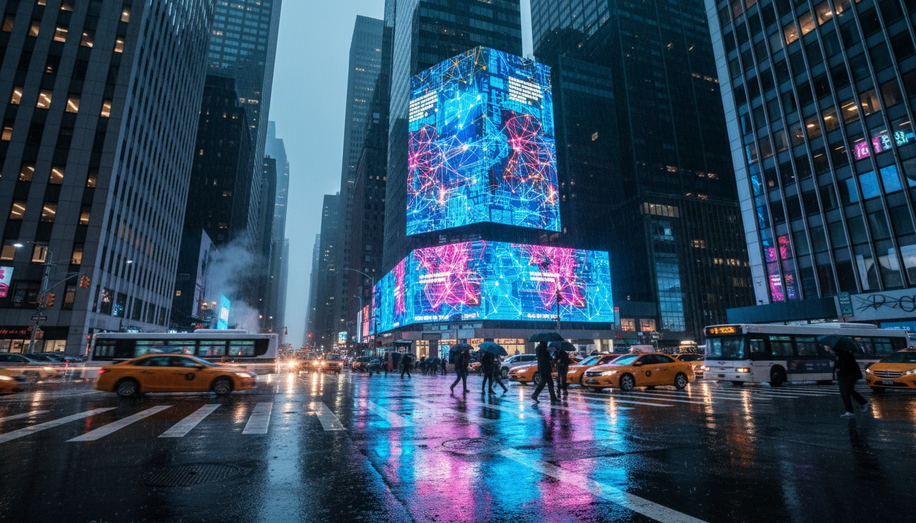

In the evolving landscape of out-of-home (OOH) advertising, the fusion of exposure data with mobile location analytics is revolutionizing how brands understand and engage audiences. Traditional impressions—mere counts of passersby—once offered a static snapshot, but integrating anonymized mobile movement data transforms these into dynamic insights revealing footfall patterns, behavioral tendencies, and true campaign impact. This marriage of physical visibility and digital precision allows advertisers to move beyond guesswork, delivering measurable returns in a cookieless era.
Clear Channel Outdoor’s RADAR suite exemplifies this shift, leveraging aggregated mobile location signals to convert directional data into actionable intelligence. By analyzing where people travel daily—commutes, shopping trips, or leisure destinations—RADAR pinpoints high-traffic zones aligned with target demographics, such as automotive enthusiasts near dealerships or retail shoppers at key POIs. For instance, an auto dealer campaign using RADAR not only boosted visibility but demonstrated tangible business lifts, proving OOH’s role in driving outcomes like sales and visits, not just awareness.
Location intelligence platforms further amplify this capability, enabling precise site selection and audience segmentation. Tools developed in partnerships, like Clear Channel’s collaboration with CARTO, map mobile data to advertising inventories, revealing attributes such as shopping habits and travel patterns. Advertisers can thus choose panels that maximize exposure to ideal audiences, micro-segmenting at granular levels for faster insights and dramatic ROI gains—a Forrester study cited in industry analyses showed mobile location data boosting digital conversions by 60% and ROI by 68%, a benchmark increasingly applicable to OOH.
Beyond planning, this data fusion illuminates post-exposure behaviors, closing the attribution loop. Mobile analytics track footfall lifts near OOH sites, quantifying how impressions correlate with real-world actions like store visits or event attendance. Platforms that organize data by site automate reporting, comparing performance across locations and segments to inform real-time optimizations. When paired with computer vision from on-site cameras, it verifies audience reach and refines future placements, turning OOH into a verifiable performance channel.
Geofencing takes this integration further, bridging OOH with mobile activation. As consumers pass billboards or digital screens, proximity triggers personalized notifications—think a restaurant discount pinged right after a bus shelter ad exposure—driving immediate foot traffic and conversions. EMC Outdoor highlights hyper-local targeting this enables, while research from the IAB underscores lifts in recall, click-through rates up to 15% higher with OOH-mobile synergy, and overall ROI. Trainline’s DOOH campaign, using dynamic creative optimization (DCO) via location feeds, tailored train offers to station-specific screens, empowering passengers with timely choices and exemplifying personalized impact.
Movement data, the backbone of these strategies, decodes consumer journeys. Derived from mobile signals, it identifies peak times and routes, optimizing ad placements in high-engagement corridors like urban commutes or retail hubs. Spatial tools with geofences and polygon mapping align sites to campaign goals, while audience penetration metrics ensure messages resonate with behaviors, from daily routines to impulse destinations. This geo-behavioral lens fosters omnichannel cohesion, syncing OOH with digital retargeting to extend exposure seamlessly.
Advertisers across sectors—CPG, retail, healthcare—are reaping rewards. In healthcare, OOH paired with mobile drives patient visits and prescriptions; in retail, it maps footfall to predict uplift. AdSquare emphasizes real-time tracking for swift adjustments, enhancing engagement by customizing creatives based on location, demographics, and timing. The result? Campaigns that not only reach but influence, forging deeper audience connections.
Challenges persist, particularly around data privacy, but anonymized, aggregated approaches like RADAR’s ensure compliance while delivering value. As platforms evolve, integrating AI for predictive modeling promises even sharper foresight. For OOH professionals, this fusion isn’t optional—it’s the path to precision in a data-rich world, where impressions evolve into enduring insights, propelling campaigns from visibility to velocity.