
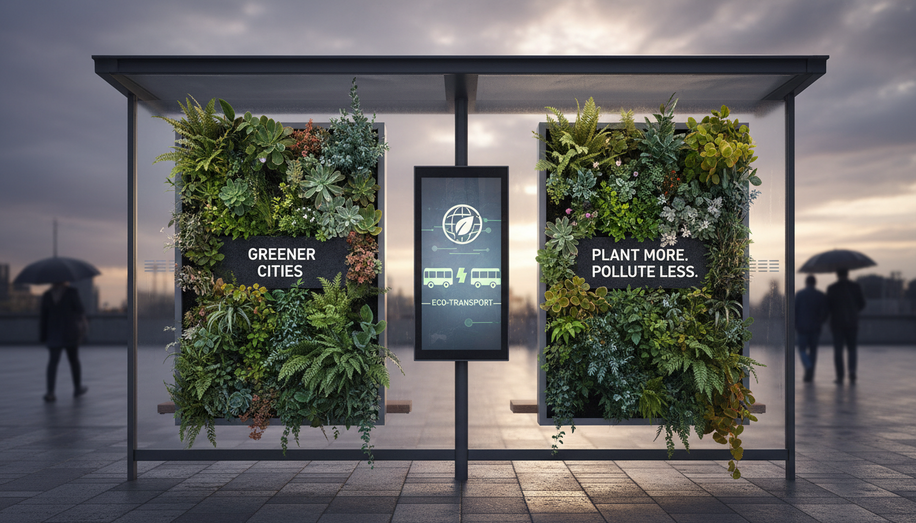

In the evolving landscape of out-of-home (OOH) advertising, the industry is pivoting from mere material swaps to a profound embrace of circular economy principles, where ad spaces themselves become assets for repurposing, recycling, and regeneration. This shift reimagines billboards, banners, and digital displays not as disposable endpoints but as dynamic components in a regenerative system that minimizes waste, harnesses renewables, and restores ecosystems, driven by regulatory pressures, consumer demand, and innovative business models.
At the heart of this transformation lies the lifecycle assessment of OOH assets, a methodology that scrutinizes impacts from raw material extraction through installation, operation, and end-of-life disposal. JCDecaux, the world’s largest OOH provider, exemplifies this approach by auditing its billboard network and identifying energy consumption as 70% of its environmental footprint, prompting a retrofit to solar-powered displays that maintain visibility while slashing carbon emissions. These solar integrations, often paired with proprietary panel systems, allow existing structures to power LED lighting and digital content without grid reliance, reducing operational costs and positioning sustainable inventory as a premium offering for eco-conscious brands. Beyond energy, the focus extends to substrates: traditional vinyl banners, once landfill-bound, are now engineered for longevity through durable, recyclable composites derived from agricultural waste, mushroom-based papers, or stone alternatives that rival conventional materials in print quality and weather resistance.
Repurposing stands out as a cornerstone of OOH’s circular strategy, turning expired campaigns into community resources. Banners from high-traffic installations, such as those along highways or urban intersections, are collected post-campaign and redirected to secondary uses, like insulating materials for tailoring workshops or construction barriers, as demonstrated in European case studies where collaborations extended banner lifespans and cut waste by integrating them into local supply chains. Digital OOH assets amplify this through smart technology: QR codes and NFC-enabled displays minimize paper handouts while directing users to virtual experiences, effectively regenerating ad space as interactive hubs that foster engagement without physical residue. In Los Angeles, for instance, LMU’s OOH campaigns partnered with recycling programs to repurpose vinyl into community projects, ensuring old materials loop back into productive use and bolstering a circular economy that resonates with Gen Z and millennial audiences prioritizing brand authenticity.
Recycling processes have matured into sophisticated networks, with OOH firms like JCDecaux implementing responsible waste management protocols that prioritize circular flows over linear disposal. Vinyl scraps and obsolete frames are shredded into reusable pellets for new signage or downcycled into road linings and playground surfacing, while metal structures from dismantled billboards are melted and reformed, preserving finite resources. This closed-loop thinking extends to printing: sustainable inks derived from vegetable bases and water-based processes eliminate volatile organic compounds, enabling printed media to enter recycling streams without contamination. Industry leaders report not only environmental gains—such as reduced landfill contributions—but also economic upsides, including cost savings from lower energy bills and heightened consumer loyalty, as brands like Patagonia leverage repurposed OOH to authentically communicate their “Don’t Buy This Jacket” ethos.
Yet, true regeneration pushes OOH beyond mitigation toward active ecological restoration. Regenerative practices involve site selection that avoids habitat disruption, opting for urban brownfields or underutilized rooftops where billboards can double as green infrastructure hosts—solar panels shading native plantings or rainwater collectors integrated into frames. JCDecaux’s model evolves further by marketing these regenerated spaces as value propositions, attracting premiums from partners in conservation collaborations that amplify messaging through verified impact metrics. Life-cycle tools now quantify multifaceted benefits, from water savings in production to biodiversity uplift from material sourcing, enabling data-driven optimizations like AI-targeted placements that maximize reach while minimizing ecosystem strain.
Challenges persist: scaling recycling infrastructure demands cross-industry partnerships, and verifying “green” claims requires transparent auditing to avoid greenwashing accusations. Still, the momentum is undeniable. As OOH assets evolve into regenerative engines—repurposed for social good, recycled into new value chains, and regenerated to heal environments—the sector positions itself as a leader in the circular economy. Brands investing here don’t just advertise; they architect a sustainable future, where every billboard tells a story of renewal.