
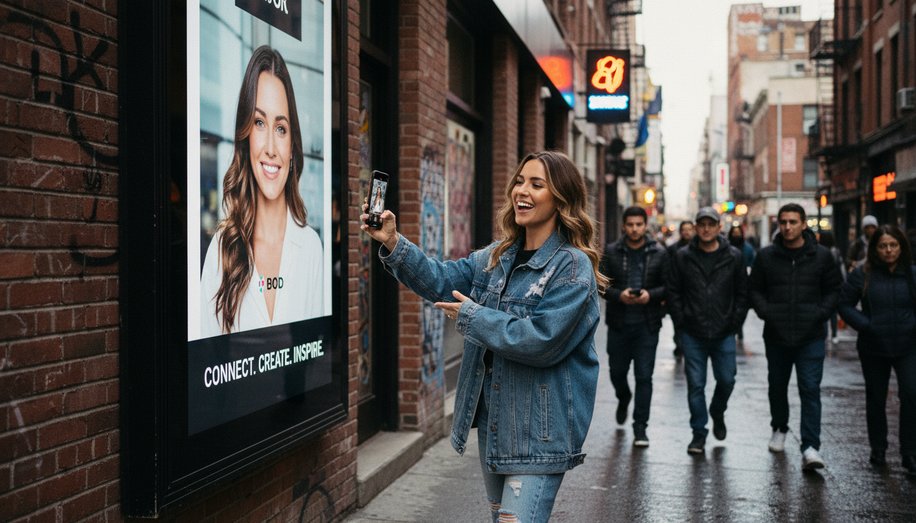

The convergence of out-of-home advertising and influencer marketing represents one of the most compelling developments in contemporary brand communication, offering a pathway to reach consumers across both physical and digital spaces simultaneously. This hybrid approach harnesses the broad visibility of traditional outdoor media alongside the authentic engagement that influencers command, creating a seamless customer journey that neither channel can achieve independently.
Traditional out-of-home advertising has long excelled at generating mass awareness and capturing attention in high-traffic environments. Yet in an era where consumer trust hinges on authenticity, billboards and transit ads increasingly function as amplification tools for influencer voices rather than standalone marketing statements. When brands strategically integrate OOH placements with influencer partnerships, they plant awareness seeds in physical spaces while simultaneously nurturing engagement through trusted digital voices, creating what researchers describe as a powerful synergy between offline and online touchpoints.
The mechanics of this integration are becoming increasingly sophisticated. Coca-Cola’s “Share a Coke” campaign exemplifies how the model operates at scale: traditional advertising through billboards and print introduced the campaign to mass audiences, while influencers extended reach and drove viral engagement across social platforms, resulting in millions of consumer posts and stories. More recently, beauty brand Glossier leveraged billboards in major cities while having influencers share behind-the-scenes content of billboard shoots, creating anticipation and buzz that drove measurable online sales through influencer-promoted discount codes. Similarly, an out-of-home campaign in Los Angeles featuring wrapped electric buses and posters increased sales by 42 percent while simultaneously growing TikTok followers by 14 percent, demonstrating the tangible business impact of integrated approaches.
What distinguishes successful OOH-influencer partnerships is their reliance on authenticity and community building rather than transactional endorsements. YETI’s ambassador program illustrates this principle: the outdoor brand has scaled from two ambassador communities in 2006 to fifteen by 2023, each centered on lifestyle segments from fishing to skate culture. These influencers don’t simply promote products; they demonstrate how YETI offerings naturally integrate into authentic outdoor lifestyles through storytelling and video content. When OOH campaigns feature these same influencers, the physical advertisements become extensions of narratives audiences already trust and follow digitally.
The strategic placement of influencer-centric OOH materials amplifies this effect considerably. Nike’s collaboration with local fitness influencers illustrates targeted deployment: billboards featuring these influencers were positioned near gyms and running tracks, where the audience most receptive to their message would encounter them, while influencers simultaneously shared workout routines and product experiences across social channels. This geographic and demographic alignment ensures that OOH placements reinforce rather than contradict the messaging audiences receive through influencer channels, creating consistency that builds credibility.
Beyond reach and engagement metrics, this integration addresses a fundamental challenge in modern marketing: the credibility gap between traditional advertising and consumer expectations for authenticity. Influencers excel at converting broad awareness created by traditional campaigns into meaningful, targeted engagement by speaking authentically to specific audiences. Out-of-home advertising provides the awareness infrastructure; influencers provide the trust layer that transforms awareness into action. A billboard creates recognition; an influencer’s genuine endorsement creates conviction.
The financial implications are similarly compelling. Brands experience measurable improvements across multiple metrics when OOH and influencer strategies operate in concert. Sales increases, social media growth, and enhanced brand visibility typically exceed what either channel achieves independently, suggesting that the integration generates returns that transcend simple additive effects.
As consumer behavior increasingly fragments across physical and digital environments, brands that fail to integrate these channels risk inefficiency and missed connection opportunities. The most sophisticated marketers now view OOH and influencer marketing not as separate disciplines but as complementary components of unified brand communication strategies. This convergence reflects broader marketing maturation: the recognition that modern consumers encounter brands across multiple touchpoints and expect coherent, authentic messaging regardless of channel. The symbiotic relationship between OOH and influencer marketing, built on authenticity and strategic alignment, represents the future of campaigns designed for audiences who inhabit both offline and online spaces simultaneously.