
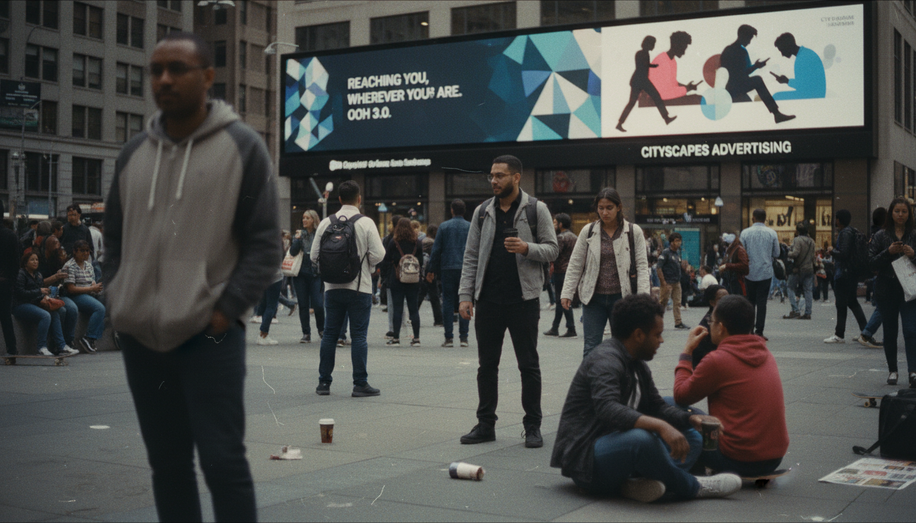

The remote work revolution has fundamentally reshaped daily routines, slashing traditional commutes and scattering audiences across suburbs, small towns, and home offices, yet out-of-home (OOH) advertising thrives by adapting to these shifts with precision targeting and innovative placements. Once reliant on rush-hour highways and urban transit hubs, OOH now captures a more distributed population, where 75% of professionals in 17 countries anticipate ongoing remote arrangements, funneling spending power into local neighborhoods and leisure spots. Far from declining, the sector is projected to hit $9.89 billion in 2026, propelled by digital OOH’s flexibility and unavoidable visibility that sidesteps ad blockers plaguing online channels.
Commutes have dwindled, but movement persists in new patterns. Remote workers, freed from daily office treks, linger longer in their communities—visiting parks, gyms, cafes, and shops—creating ripe opportunities for hyper-local OOH. Data reveals working-from-home Gen Zers are 35% more likely than average remote professionals to hit the gym and 30% more prone to outdoor exercise before work, making placements near fitness centers and green spaces prime for engagement. Brands ignoring these locales risk bypassing influential consumers with substantial purchasing power, as routines diverge sharply: commuters stick to transit and roads, while distributed workers favor pedestrian-friendly, everyday environments. This bifurcation demands segmented strategies—roadside units and crosstrack ads for the dwindling office crowd, static billboards in residential areas for those grabbing coffee or strolling to errands.
Strategic placements are evolving to mirror this mobility mosaic. In London, one campaign smartly blanketed mainline stations for remaining travelers, extended Underground crosstrack ads beyond central zones, added roadside units for car journeys, and deployed neighborhood billboards to snag locals on casual walks. American Express exemplified this with “Built for Business” installations turning billboards into desks, park benches into charging hubs, and phone booths into private call spaces across New York, Chicago, and Austin—blending OOH with remote work’s realities to foster brand affinity amid hybrid lifestyles. Busch Light pushed further with TreeWork, a wooded Colorado co-working setup boasting Wi-Fi, grills, campfires, and happy hours, transforming OOH into immersive experiences that celebrate WFH escapism. Guerrilla tactics amplify reach: sidewalk chalk, building projections, and pop-up installations surprise in unexpected spots, turning ambient spaces into viral touchpoints for a less predictable audience.
Messaging must pivot too, emphasizing relevance over intrusion. Context-aware digital OOH, responsive to location without invading privacy, resonates with 55% of viewers who find campaigns pertinent, delivering cultural tie-ins that boost action by 6% and purchase intent 1.3 times. Joy, humor, and shared experiences—tied to events, festivals, or national moments—forge emotional connections in public spaces, reinforcing community without preachiness. For remote audiences, sustainability sells: 72% of consumers pay premiums for eco-brands, so biodegradable vinyl, recycled paper, water-based inks, plant-based billboards, and solar-powered displays align with values, enhancing loyalty despite higher upfront costs. Pairing OOH with digital amplifies impact; billboard discoveries make brands 28% more likely to spark social research, as seen in swimwear label Andie’s fusion of transit ads, influencers, and online buzz.
Local businesses stand to gain most. Restaurants, gyms, salons, and cafes—reliant on foot traffic—can direct passersby straight to their doors via street furniture, transit shelters, and murals. Event promoters and tourism boards thrive on high-traffic visuals in airports or parks, inspiring impulse while regional brands build top-of-mind recall in competitive pockets. Political campaigns leverage rapid, localized visibility, unblockable by digital fatigue. Data-driven planning sharpens this edge: audience intelligence and synthetic modeling enable machine-optimized, dynamic campaigns that track performance and integrate omnichannel, fueling OOH’s 38% revenue surge in recent recoveries.
Challenges remain, from city-specific regulations on size, lighting, and content to measuring isolated OOH impact. Yet standalone efforts succeed for locals needing buzz without Google reliance, proving strong messaging cuts through alone. As 2026 unfolds, OOH’s physicality—its mass reach of thousands per ad in high-traffic zones—positions it as a global operating system for brands navigating fragmented lives. By chasing audiences where they now roam, OOH not only sustains relevance but uncovers fresh growth in a post-commute world.