
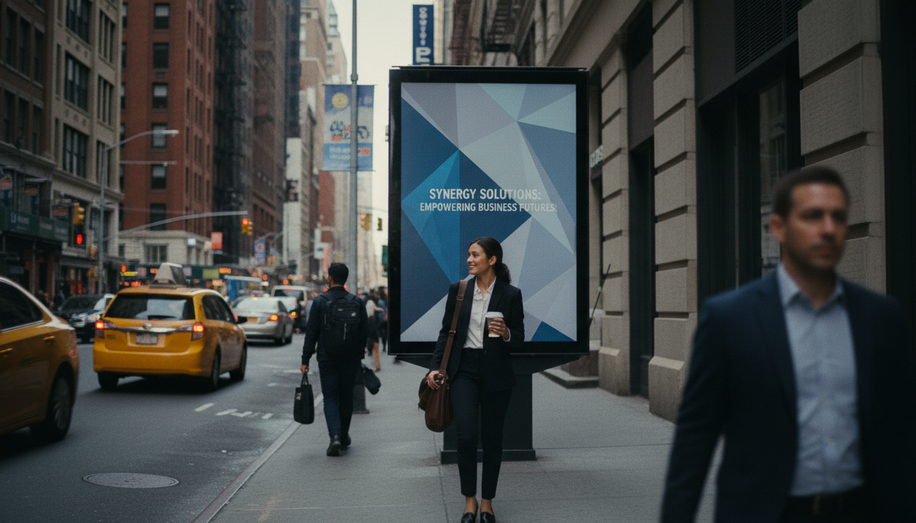

In the high-stakes world of business-to-business marketing, where decision-makers are often cloistered in boardrooms and shielded from consumer clutter, out-of-home (OOH) advertising is emerging as a stealthy powerhouse. Long dominated by splashy consumer campaigns for ice cream and luxury fragrances, OOH is now proving its mettle for B2B companies aiming to pierce corporate fortresses, elevate brand prestige, and spark leads in ways that digital fatigue can’t match. Santander, a global financial provider, harnessed programmatic digital OOH to spotlight its Corporate Commercial Banking services, blanketing high-traffic urban screens with tailored messages that boosted awareness among C-suite executives navigating busy commutes.
This shift reflects a broader evolution in OOH, fueled by programmatic technology and data precision that allow B2B marketers to target not just locations, but mindsets. Traditional billboards once blanketed highways with broad appeals, but today’s digital OOH (DOOH) activates dynamically—triggering ads only when the right audience passes by, using layers like traffic density, weather, or even flight data. For B2B, this means reaching procurement directors at office towers, HR leaders at business districts, or logistics managers near industrial hubs. A HR solutions provider targeting small-to-medium businesses ran an eight-week DOOH blitz across billboards, bus shelters, and office buildings, zeroing in on business owners, HR influencers, and C-suite pros at firms with 50-149 employees. By layering audience data with real-time venue traffic, the campaign ensured messages hit receptive eyes, driving measurable lifts in awareness, consideration, and purchase intent.
Corporate branding, often a dry exercise in white papers and LinkedIn posts, finds vivid life on OOH’s massive canvases. Rice Business, a U.S. business school, deployed airport screens to promote its MBA program, capturing ambitious professionals mid-travel when minds wander to career pivots. The unmissable visuals—sleek graphics of alumni success stories—cut through airport din, fostering top-of-mind recall far beyond email open rates. Similarly, Santander’s DOOH push framed its banking expertise as indispensable for enterprise growth, using premium placements in financial districts to signal reliability and sophistication. These efforts underscore OOH’s branding alchemy: its physical scale commands subconscious authority, positioning B2B players as industry titans without the hard sell.
Lead generation, the holy grail for B2B, unlocks through OOH’s unexpected integrations with digital ecosystems. Programmatic DOOH pairs seamlessly with mobile retargeting, turning passive exposures into active pursuits. American Express blended DOOH with mobile to guide business travelers from airport billboards to app downloads and consultations. In another coup, a HR tech firm combined DOOH near office complexes with QR codes and geo-fenced alerts, prompting executives to scan for demos—yielding direct leads from decision-makers who’d otherwise ignore inbound emails. Even niche tactics shine: Santévet, a pet health service with B2B angles for vets, triggered ads only near animal shelters and clinics, blending location radius with real-time buying to connect with practitioners at peak receptivity. Results? Spikes in inquiries and partnerships, proving OOH’s prowess in converting ambient awareness to pipeline fuel.
What makes these B2B OOH plays revolutionary are their “unexpected ways”—hyper-local, context-aware activations that defy cookie-cutter digital ads. BrewDog’s weather-triggered campaign for hazy beer offers a consumer parallel, but imagine a logistics firm lighting up DOOH panels only during rush hour near warehouses, syncing with supply chain pain points. Or a SaaS provider for manufacturers geo-targeting factory districts with dynamic creative showing real-time ROI calculators. HP’s Instant Ink campaign ran prDOOH near retail partners, using time-of-day targeting to nudge IT buyers toward subscriptions, blending OOH with CTV for omnichannel persistence. Rice Business’s airport play similarly tapped transient moments when pros mull professional development, driving MBA inquiries amid gate delays.
Challenges persist—measuring attribution in B2B’s long sales cycles demands robust lift studies and cross-channel tracking. Yet data from VIOOH case studies shows programmatic DOOH delivering 20-30% awareness uplifts, with B2B campaigns like Santander’s rivaling consumer benchmarks. Indoor venues like office lobbies and transit hubs amplify this, reaching decision-makers untethered from desks. As privacy regs tighten digital targeting, OOH’s contextual, non-invasive approach gains favor, especially with first-party data integrations seen in M&S campaigns.
Forward-thinking B2B leaders are already experimenting boldly. Financial services firms eye flight-activated ads at hubs frequented by traveling execs, mirroring luxury brands’ duty-free boosts. Tech providers test affinity targeting for “enterprise IT” segments on running routes or gym screens, akin to Puma’s precision buys. The verdict is clear: OOH isn’t just for B2C anymore. By claiming high-visibility real estate where decisions brew—commutes, airports, business corridors—B2B marketers unlock branding gravitas and leads that feel serendipitous, not solicited. In a fragmented media landscape, OOH’s bold permanence reminds executives: your solutions are unavoidable, just like the billboard they can’t scroll past.