
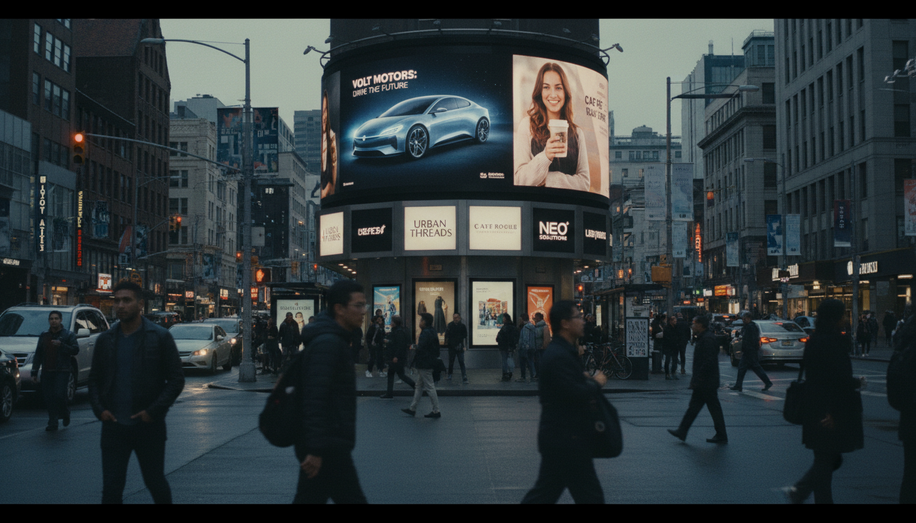

In an era dominated by digital screens, out-of-home (OOH) advertising stands as a visceral reminder of brands’ power to command attention in the physical world, forging recognition, trust, and emotional bonds that linger long after the moment passes. Billboards towering over highways, murals splashed across urban walls, and transit wraps on buses do more than capture eyes—they embed brands into the rhythm of daily life, creating a foundational layer of awareness that digital channels often struggle to replicate with the same immediacy and scale. This unskippable presence ensures that 98% of consumers encounter OOH weekly, turning passive passersby into subconsciously primed advocates.
OOH’s strength in brand building begins with its unmatched visibility and persistence. Unlike fleeting social media ads or skippable videos, OOH delivers 24/7 exposure in high-traffic zones, from stadium banners to street furniture, allowing messages to seep into collective memory through sheer repetition. A billboard glimpsed daily on the commute home doesn’t just register; it accumulates, fostering familiarity that breeds trust. When consumers face a choice—say, selecting an injury lawyer or a local dentist—that persistent imagery surges to the forefront, driving recall and preference. Research underscores this: OOH generates the highest share of post-exposure online searches and site visits among media types, proving its role in elevating brands from obscurity to top-of-mind status.
This foundational awareness extends to emotional connection, where OOH excels by transforming public spaces into storytelling canvases. Brands leverage bold, immersive creatives to spark conversations and media buzz, far beyond mere impressions. Consider Bobbie’s Times Square billboard featuring supermodel Ashley Graham in a combo-feeding pose—a provocative statement on parenting that earned widespread press and social amplification, reinforcing the brand’s mission while humanizing it for audiences. Such activations don’t just build recognition; they cultivate affinity by aligning with cultural moments, making consumers feel seen and part of a larger narrative. OOH’s physicality amplifies this: a massive mural or arena ad isn’t consumed in isolation but shared in real time, via photos and discussions, extending its emotional reach organically.
Trust emerges from this authenticity. Placed strategically—car dealerships on highways, energy drinks at point-of-sale—OOH targets audiences in context, demonstrating relevance without intrusion. Guerrilla projections or drone displays add surprise, delighting viewers and humanizing brands in unexpected ways. In-store signage and mall ads further bridge awareness to action, subtly reinforcing quality and availability when purchase intent peaks. This contextual precision builds credibility: consumers trust a brand appearing where they live, work, and play, not just in their feeds.
Critically, OOH drives top-of-funnel impact with lasting resonance, now bolstered by measurable proof. Once dismissed for lacking attribution, modern OOH integrates geolocation data, mobile IDs, and foot traffic analysis to quantify lifts in website visits, branded searches, and conversions. Nearly one-third of respondents to OOH ads visit the brand’s site, while a quarter head to physical locations, underscoring its power to propel awareness down the funnel. Digital out-of-home (DOOH) elevates this further, enabling real-time updates, QR codes, and programmatic targeting for dynamic synergy with online efforts. A highway DOOH ad directing to a nearby retailer via venue-specific CTAs, for instance, seamlessly blends worlds, boosting in-store traffic and online engagement.
Yet OOH’s true genius lies in omni-channel amplification. Far from a standalone relic, it complements digital by expanding reach cost-effectively—boasting low CPMs and high ROI—while priming audiences for performance channels strained by privacy hurdles and rising costs. When paired with social handles, hashtags, or URLs, OOH sparks shares, extending campaigns virally and driving traffic across ecosystems. Brands like global eyewear giants have seen Nielsen-measured success, with OOH contributing to overall uplift in awareness and sales. This synergy positions OOH as the ultimate brand builder: it doesn’t just interrupt; it integrates into life, creating unforgettable presence that outlives the ad buy.
As urban landscapes evolve with DOOH innovations, OOH remains indispensable for cultivating the emotional architecture of brands—recognition that feels inevitable, trust earned through proximity, and connections that inspire loyalty. In a fragmented media world, its ability to dominate shared spaces ensures brands don’t just compete for attention; they own it.