
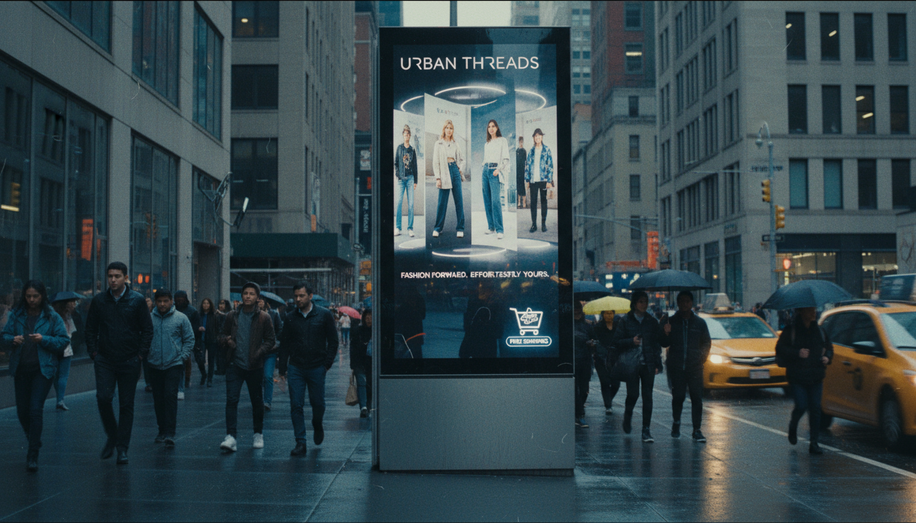

In the hyper-competitive world of e-commerce, pure-play brands—those thriving exclusively online without physical stores—face a unique challenge: cutting through digital noise to forge real-world connections. Out-of-home (OOH) advertising, long dominated by brick-and-mortar giants, has emerged as a potent weapon for these digital natives, bridging the gap between screens and streets to amplify brand awareness, spike website traffic, and convert passersby into loyal customers. By leveraging bold visuals in high-traffic environments, e-tailers are proving that offline exposure can supercharge online growth, often with measurable lifts in sales and engagement.
Consider Glossier, the beauty powerhouse that bootstrapped its empire through Instagram before expanding its footprint via OOH. Starting as a digital darling, Glossier deployed consistent street-level campaigns to build instant recognition, cleverly signaling product availability at Sephora retailers while reinforcing its online ethos. These placements transformed urban commutes into brand encounters, capturing short-attention-span millennials during daily routines and driving them straight to the website for purchases. The strategy’s genius lay in its simplicity: eye-catching creatives that echoed Glossier’s minimalist aesthetic, placed in high-visibility spots to create a halo effect. Traffic surges followed, as offline buzz funneled users online, validating OOH’s role in scaling awareness for e-commerce brands lacking shelf space.
Outdoor apparel brands, too, have mastered this hybrid playbook. Dixie Creek Outdoors, a pure-play e-tailer with stellar products but stalled growth, initially relied on organic efforts and faltering self-run digital ads. Lacking Google Ads presence and email nurturing, the brand missed high-intent shoppers and repeat buyers. Partnering with specialists, they integrated targeted Meta and Google campaigns, but the real breakout came from OOH-inspired visibility that spilled into wholesale expansion. Owners reported spotting their gear at airports and industry events, establishing a national footprint that correlated with online revenues exploding 5x—from $17,000 to $85,000 monthly in just 90 days, at a 4.4x return on ad spend. While not purely OOH, this organic awareness boost underscores how physical presence, amplified by strategic advertising, accelerates e-commerce trajectories for niche players.
Mammut, the Swiss climbing gear specialist operating primarily online in the UK, took collaboration to new heights with a Peak District retailer, Outside. Facing the need for localized visibility in a hiking hotspot, Mammut co-created authentic video content showcasing gear tests on Kinder Scout, then blasted it via OOH-adjacent social promotion from the retailer’s channels. Custom audiences from prior engagements extended reach, yielding over 20,000 targeted video views and a 50% uplift in brand traffic to Outside’s Mammut pages during Q2 2018—compared to the prior year. This case illustrates a key strategy: partnering with physical touchpoints to humanize e-commerce brands, blending OOH-style content with digital amplification for traffic that converts.
Strategies extend beyond apparel. Weather-triggered digital OOH (DOOH) offers precision timing for impulse-driven categories. Aperol Spritz, while not purely e-commerce, mirrors the tactic pure-plays can adopt: programmatic ads activated only above 66°F near social hubs, aligning exposure with consumer mindset for peak engagement. E-tailers like Rain-X have similarly synced DOOH with rain forecasts, appearing precisely when demand peaks, blending relevance with massive reach to drive online sales. For pure-play brands, this means geo-fencing high-intent zones—airports for travel gear, urban gyms for fitness apparel—and tying creatives to dynamic triggers like weather or events.
Execution demands data-savvy integration. Pure-plays start with audience mapping: targeting high-income commuters in Northwest D.C. for luxury e-tailers, or event-goers for experiential brands. Creatives must scream uniqueness—immersive visuals for fruit-themed pop-ups that sold tickets online, or salon relocations sparking awareness for service-based e-bookers. Measurement is non-negotiable: QR codes, custom URLs, and pixel tracking quantify lifts, as seen in Glossier’s Sephora tie-ins or Mammut’s traffic spikes. Agencies like those behind Dixie Creek layer OOH with retargeting, ensuring offline sparks ignite digital fires.
Challenges persist—budget constraints and attribution hurdles—but successes abound. Pyara Salon’s post-relocation OOH blitz reacquainted patrons with its expanded online booking portal, fostering loyalty offline. Content-driven leaders like Patagonia amplify e-commerce via storytelling billboards, echoing their blog’s adventure narratives to lure traffic. As programmatic DOOH evolves, pure-plays gain scalability, with platforms enabling real-time optimization.
Ultimately, OOH redefines growth for online-only brands by injecting tangibility into virtual realms. From Glossier’s street cred to Mammut’s community conquests, these campaigns prove that in an ad-saturated digital landscape, nothing drives demand like a billboard that stops you in your tracks—then sends you scrolling. E-commerce leaders ignoring this channel risk ceding ground to bolder rivals harnessing the power of place.