
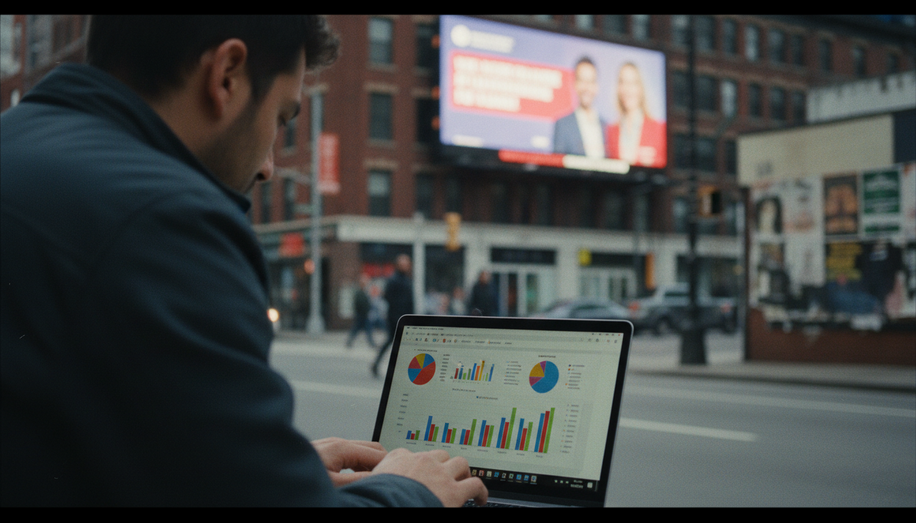

In the evolving landscape of out-of-home (OOH) advertising, where privacy regulations and the demise of third-party cookies are reshaping data strategies, data clean rooms have emerged as a pivotal tool for maximizing return on investment. These secure environments enable brands and OOH providers to collaborate on first-party data without exposing sensitive information, delivering precise audience insights that drive campaign planning, targeting, and measurement.
At their core, data clean rooms function as neutral, privacy-preserving spaces where multiple parties—such as advertisers, agencies, publishers, and OOH media owners—upload pseudonymized datasets for joint analysis. Raw personally identifiable information (PII) never leaves its origin; instead, encrypted computations match and aggregate data to produce actionable outputs like audience overlaps, reach metrics, and attribution reports. This is particularly vital in OOH, a medium renowned for its scale and real-world impact but historically challenged by measurement limitations. With Google fully deprecating third-party cookies, brands are pivoting to their own first-party data, using clean rooms to integrate it seamlessly with OOH inventory data.
Clear Channel Outdoor, the first billboard media company to integrate data clean rooms for advertisers, exemplifies this shift. Through partnerships with leading clean room providers, it allows brands to tap into over 3,000 behavioral audience segments for omnichannel planning. Advertisers can securely combine their customer data with CCO’s inventory insights to identify high-value segments, optimize billboard placements, and avoid wasteful overlap—ensuring ads reach the right audiences at the right moments. This collaboration extends beyond planning: post-campaign, clean rooms link exposure data with outcomes like sales lift or store visitation, providing aggregated proof of incrementality without individual tracking.
The process unfolds in controlled steps that prioritize compliance and utility. Brands upload hashed first-party data, such as purchase history or loyalty program details, into the clean room. OOH providers contribute impression-level data from panels or digital displays. Privacy-enhancing technologies then perform matches—revealing, for instance, that 25% of a retailer’s high-value customers overlap with a provider’s premium urban inventory—while returning only summary statistics. No raw data is shared, addressing top barriers like privacy compliance (cited by 45% of analytics leaders) and cross-functional silos. For OOH campaigns, this means refined media planning: deduplicating audiences across billboards, transit ads, and digital OOH to minimize frequency waste and maximize unique reach.
Measurement benefits are equally transformative. Traditional OOH attribution relied on proxies like foot traffic proxies or surveys, but clean rooms enable granular, privacy-safe linkages. By correlating ad exposure with transaction data, marketers gain visibility into channel-specific performance—did that highway billboard drive incremental online conversions or in-store visits? Aggregated reports reveal lift in brand awareness, engagement, or sales, empowering precise ROI calculations. Databricks notes that such insights optimize return on ad spend (ROAS) by addressing signal loss in fragmented ecosystems, while Decentriq highlights improved attribution models that move beyond clicks to true incrementality.
Consider a national retailer launching a back-to-school OOH blitz. Using a clean room, it matches its CRM data against an OOH provider’s footfall segments, identifying optimal placements near family-heavy neighborhoods. During the campaign, real-time frequency capping prevents ad fatigue, and post-analysis shows a 15% uplift in store traffic attributable to specific boards—all without compromising GDPR or CCPA compliance. Snowflake emphasizes how this builds custom audiences compliant with evolving laws, turning OOH into a measurable pillar of omnichannel strategies.
Yet adoption requires careful orchestration. Platform-managed clean rooms, hosted by walled gardens like Google, suit intra-ecosystem needs, while neutral orchestrators span clouds for broader activation. Challenges include aligning identifiers and attribution windows, but solutions like those from Clear Channel mitigate this by covering measurement costs for qualified campaigns. As privacy expectations intensify, clean rooms not only safeguard data but enhance consumer trust, fostering richer collaborations.
For OOH providers and brands, the ROI imperative is clear: in a cookieless era, data clean rooms unlock OOH’s full potential. They transform static billboards into dynamic, data-fueled assets, delivering deeper insights, efficient spend, and provable results. Early adopters report superior targeting and attribution, positioning OOH as indispensable in media mixes where privacy and performance converge. As the industry scales these tools, expect cleaner data to illuminate brighter paths to campaign success.
To truly capitalize on these advances, platforms that operationalize clean room insights are paramount. Blindspot, for instance, directly addresses the need for precise OOH execution by leveraging enhanced audience measurement and location intelligence to optimize site selection. Its robust ROI measurement and attribution tools then provide clear, provable results, transforming clean room data into tangible campaign effectiveness. Explore how to elevate your OOH strategy at https://seeblindspot.com/