
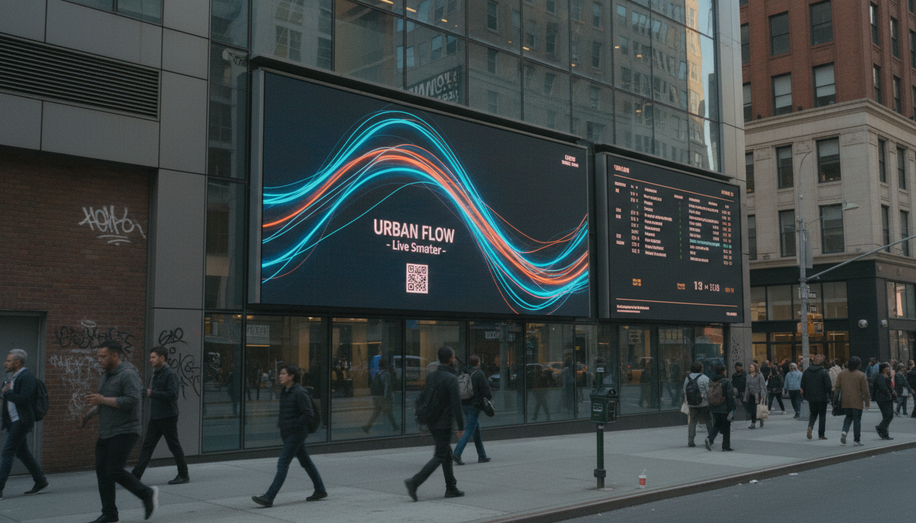

In the bustling streets of urban centers, where digital billboards flicker against the skyline, a retail chain’s promotion suddenly shifts: umbrellas materialize in the ad copy as rain begins to fall, directing commuters to the nearest store with weatherproof gear. This seamless adaptation is the hallmark of Dynamic Creative Optimization (DCO) in Digital Out-of-Home (DOOH) advertising, a technology that transforms static screens into responsive canvases, tailoring messages in real time to audience segments, environmental cues, and performance metrics for unparalleled impact.
At its core, DCO leverages programmatic platforms to automate creative updates, starting from a master asset—a high-quality image or video embodying the brand’s essence—and dynamically assembling variations using modular components like visuals, text, and calls-to-action. Unlike traditional out-of-home ads locked into fixed rotations, DCO pulls from real-time data feeds, including weather, traffic patterns, time of day, footfall analytics, and audience demographics, to generate hundreds or even thousands of personalized versions. For instance, a coffee brand might swap sunny beach imagery for steaming mugs during morning rush hour near office districts, or adjust promotions based on nearby store proximity, ensuring every impression feels bespoke.
This real-time personalization stems from integrations with demand-side platforms (DSPs) that employ AI, machine learning, and real-time bidding to manage campaigns at scale. Marketers predefined triggers—such as commuter patterns detected via footfall data or environmental shifts like match odds for sports ads—and the system responds instantaneously, optimizing delivery without manual intervention. Screenverse executive Montana Accavallo highlights this shift: DCO “unlocks the ability to scale personalized storytelling across diverse out-of-home environments, making DOOH a powerful and strategic channel for modern marketing.” The result is a medium that bridges offline exposure with online behavior, such as embedding QR codes that link to digital promotions, fostering omnichannel cohesion.
Environmental factors play a pivotal role, elevating DOOH beyond broad strokes. Platforms like Perion’s use location-based triggers to adapt messaging; a retail ad might highlight nearby outlets during peak traffic or pivot to rain gear amid sudden downpours, directly tying creative to viewer context. Displayce’s DCO, for example, incorporates flight destinations at airport screens or traffic data on highways, ensuring ads resonate with passersby in the moment. Research underscores the payoff: dynamic creatives deliver 38% more ad impact than static ones, with higher engagement rates driven by relevance that static campaigns simply can’t match.
Audience segmentation takes this further, blending first- and third-party data for precision targeting. Behavioral insights, psychographics, and even browsing history inform variations, allowing a single campaign to serve distinct messages—promoting running shoes to fitness enthusiasts or hiking gear to outdoor types, much like retargeting in digital display. In DOOH, this manifests on street-level screens where audience concentration data detects target demographics, triggering optimized creatives during peak hours. Programmatic DOOH amplifies this through private marketplaces and RTB auctions, where creatives adjust on the fly based on performance analytics, continuously refining for better ROI.
Campaign performance optimization closes the loop, with live analytics enabling A/B testing at unprecedented scale. Traditional testing pales against DCO’s capacity to spin up myriad options and select winners in real time, boosting full-funnel strategies from awareness to conversion. Brands report improved in-store visits and online traffic, as ads not only capture attention but compel action—think time-sensitive deals flashing during lunch rushes or event-tied promotions near venues.
Yet DCO’s true revolution lies in its adaptability across screen formats and placements. A master creative morphs effortlessly for billboards, transit hubs, or mall displays, maintaining brand consistency while feeling hyper-local. This flexibility counters DOOH’s historical perception as static, injecting digital agility into physical spaces and aligning it with consumer expectations for personalization—71% of whom favor tailored ads over generic blasts.
Challenges persist, including data privacy compliance and the need for robust tech stacks, but advancements in AI are smoothing these hurdles. As programmatic DOOH matures, DCO positions the medium as a linchpin for modern marketing, where every screen tells a story tuned to the now. For advertisers, the message is clear: in an era of fleeting attention, relevance isn’t optional—it’s the edge that turns impressions into lasting connections.