
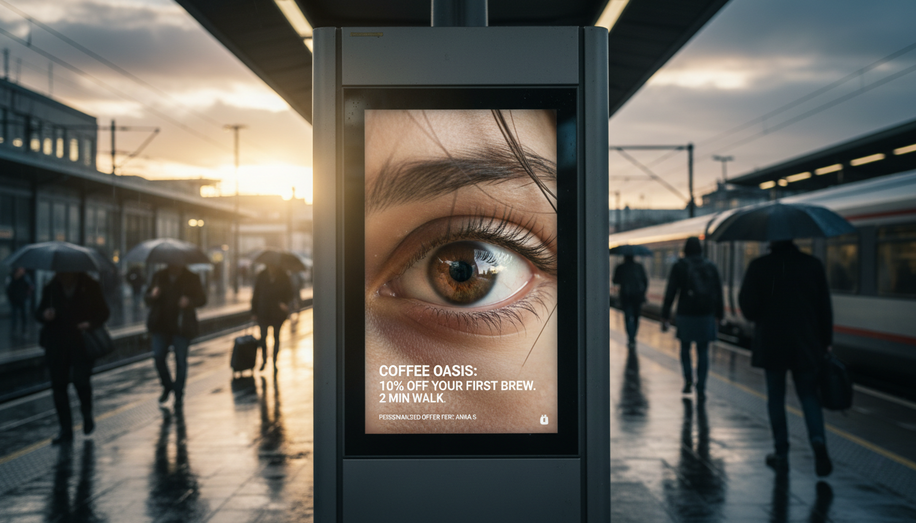

Digital out-of-home (DOOH) advertising stands at a critical inflection point as the industry embraces real-time personalization while grappling with growing consumer privacy concerns. With programmatic DOOH spend projected to reach billions in 2026 and the channel expected to account for over 40% of total outdoor ad spend, the pressure to deliver increasingly targeted messages has never been greater. Yet this technological capability must be tempered by a deeper understanding of what consumers actually want from the brands reaching them in public spaces.
The appeal of personalization in DOOH is undeniable. Digital billboards now enable advertisers to refresh messages instantly, adapting content based on time of day, weather conditions, and contextual triggers. Location data and real-time analytics allow marketers to deliver hyper-localized messages tailored to specific neighborhoods and events, ensuring maximum relevance and impact. When paired with mobile integration and geofencing capabilities, a consumer who sees a billboard can receive a personalized offer on their phone within moments, creating seamless omnichannel experiences. This level of precision represents a fundamental departure from the static, broad-brush approach that defined outdoor advertising for decades.
However, the pursuit of relevance must contend with a troubling reality: 57% of British adults report that personalized advertisements creep them out. This sensitivity extends beyond online spaces. Consumers increasingly feel uneasy when ads appear to be tracking their behavior, conversations, or one-off interactions, resulting in growing resistance to anything that feels overly intrusive. For DOOH, this presents a paradox. The channel’s greatest strength—its ability to reach people in real-world moments—can also feel invasive if execution prioritizes tracking over transparency.
The solution lies not in abandoning personalization, but in reimagining its foundation. DOOH possesses a distinct advantage over other digital channels: it can deliver relevance through time, place, and environment rather than personal data tracking. This contextual approach avoids the intrusive feel of hyper-personalized digital ads while maintaining campaign effectiveness. A message that shifts based on weather conditions, time of day, or nearby retail activity feels responsive to the moment rather than surveil-lance driven. Research shows that 55% of people say OOH campaigns feel relevant to them, suggesting that consumers can distinguish between respectful contextual messaging and invasive tracking.
Brands building DOOH strategies around this principle are discovering competitive advantages. By leveraging anonymous, contextual signals rather than individual-level tracking, campaigns feel transparent and respectful, helping brands build credibility and trust. This approach aligns with broader market shifts toward first-party data and contextual targeting, where insights come from customers’ voluntary interactions with loyalty programs, retail transactions, and shopping patterns rather than from surveillance-adjacent mechanisms.
The integration of artificial intelligence further supports this balance. AI-driven content optimization can enable dynamic creative execution at scale without requiring granular personal data. Campaigns powered by data signals like location type and environmental triggers can adapt in real time while remaining grounded in ethical data practices. As workflows continue to improve and buyers become more comfortable with programmatic DOOH technology, execution will become faster and more cost-efficient—without sacrificing the privacy principles that increasingly define consumer expectations.
Strategic placement in high-traffic locations such as transit hubs, retail zones, and city centers remains central to DOOH’s success. But in 2026, location strategy must evolve beyond identifying where screens sit to understanding the audiences and moments brands want to reach. This audience-first planning, grounded in transparent data practices, positions DOOH as a channel that respects privacy while delivering genuine relevance.
The brands that will lead in 2026 are those that recognize personalization as an opportunity to build trust, not exploit data access. By delivering context-driven messages that feel helpful rather than intrusive, DOOH can cement its role as a fundamental component of omnichannel strategy—one that reaches consumers in authentic, culturally resonant moments while maintaining the ethical guardrails that modern audiences increasingly demand.