
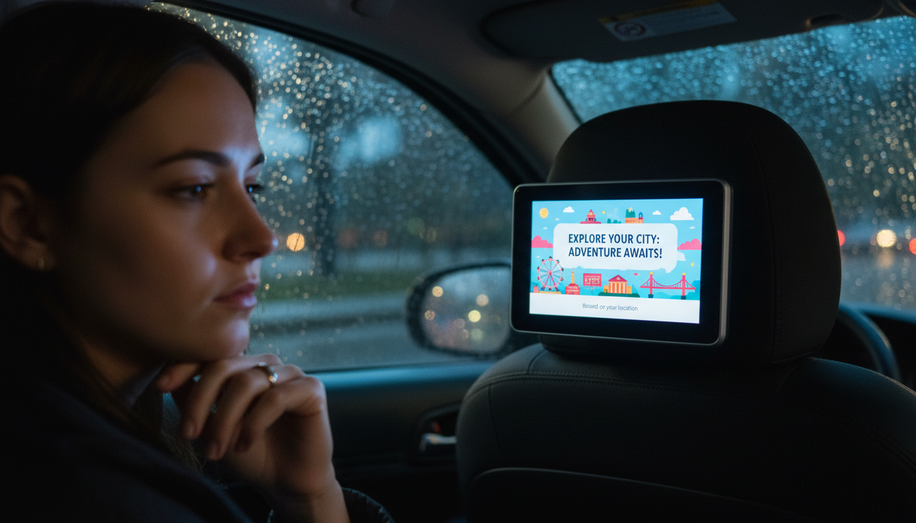

In the shadowed corners of urban life, where commuters pause at charging stations or shoppers linger in pharmacy aisles, a quiet revolution is unfolding. Micro-DOOH—small-format digital out-of-home screens deployed in niche, often overlooked venues—is transforming advertising from broad blasts into precision strikes, capturing audiences in moments of undivided attention. These compact displays, no larger than a tablet or laptop screen, are proliferating in places like gas station pumps, elevator lobbies, gym lockers, and even restroom mirrors, enabling brands to deliver ultra-targeted messages that feel personal rather than pervasive.
This surge aligns with DOOH’s explosive growth trajectory. PwC forecasts the overall DOOH market hitting $5.1 billion by 2026, while programmatic DOOH spend is expected to balloon into the billions globally, outpacing traditional static billboards in key regions. By late 2025, digital formats already commanded 67% of total OOH spend, driven by their programmability and data smarts. Micro-DOOH takes this further, shrinking the canvas to fit hyper-specific contexts. Unlike towering billboards vying for fleeting glances on highways, these screens thrive in semi-captive environments—high-traffic but low-distraction spots where viewers are primed for engagement.
Consider the economics: traditional OOH demanded hefty budgets and rigid contracts, sidelining smaller players. Programmatic platforms have democratized access, letting brands launch micro-campaigns with transparent pricing and real-time tweaks, much like booking online ads. A local coffee chain, for instance, can trigger promos on screens inside nearby office elevators during morning rush hours, using time-of-day data to swap creatives based on weather or events. Nielsen data underscores the reach: 60% of Americans encounter digital billboards monthly, but micro-DOOH amplifies this in venues boasting 90% noticeability among travelers.
The magic lies in dynamic creative optimization (DCO), now evolving from novelty to core strategy. Screens pull from live feeds—weather APIs, traffic patterns, inventory levels—to serve contextually relevant content. Near a stadium on game day, a sports bar might push tailgate specials; in a gym, fitness apps could flash personalized workout challenges tied to user proximity data. First-party data from loyalty programs and apps fuels this, blending with location intelligence for audience segments without cookies or privacy pitfalls. Brands report lower cost-per-impression versus untargeted OOH, as ads run only when the right demographics are present.
These intimate placements foster direct engagement, turning passive views into interactions. QR codes on micro-screens in retail checkouts link to instant discounts, while touch-enabled displays in transit hubs solicit feedback or app downloads. In 2026, 5G and AI will supercharge this: predictive analytics forecast optimal timing and creatives, enabling near-instantaneous high-def updates and interactive overlays. Political campaigns already leverage it for zip-code precision, proving its power for hyper-local persuasion. Retail media networks in gas stations and pharmacies are hubs for blended content—ads laced with entertainment or education—building affinity without intrusion.
Yet micro-DOOH’s edge sharpens in omnichannel synergy. It bridges physical movement and digital trails, orchestrating messages across DOOH, mobile, and CTV. A shopper seeing a dynamic promo on a convenience store screen gets a reinforcing push notification en route home, sequenced for maximum conversion. OAAA studies highlight DOOH’s efficiency, with CPMs rivaling digital media in urban high-traffic zones, while 55% of viewers deem campaigns relevant. This counters digital fragmentation and ad fraud, grounding reach in verifiable human presence.
Challenges persist. Coordinating DCO across fragmented networks demands early alignment on approvals and tech stacks, from DSPs to SSPs. Regulatory shifts around local hyper-targeting (LHF) and privacy add layers, though DOOH’s contextual focus—responsive to real-world cues without deep profiling—positions it as “helpful, not intrusive.” Still, as programmatic DOOH scales to $33.3 billion globally by 2026, micro-formats will anchor the shift, making every overlooked nook a strategic asset.
For niche brands, this means unprecedented agility. Boutique fashion labels target upscale apartment lobbies; artisanal food makers hit farmers’ market vending areas. The result? Measurable lift: advanced attribution tracks foot traffic, sales spikes, and cross-channel attribution akin to online benchmarks. In an era of audience splintering, micro-DOOH doesn’t chase masses—it meets them where they dwell, whisper-close.
As screens proliferate in these unexpected interstices, advertising sheds its megaphone for a murmur, proving that sometimes the smallest voice resonates loudest. With AI, 5G, and data convergence accelerating, 2026 marks micro-DOOH’s ascent as the nimble scout in OOH’s expanding army, redefining relevance one venue at a time.