
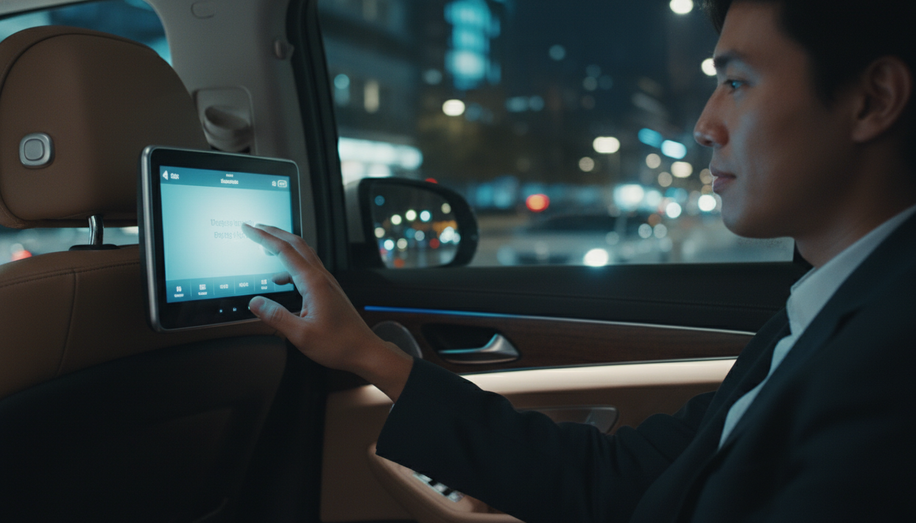

In the bustling streets of urban America, where rideshare vehicles dart between traffic jams and autonomous shuttles whisper promises of a driverless future, out-of-home (OOH) advertising is undergoing a profound transformation. No longer confined to static billboards or bus wraps, OOH is infiltrating the cabins of taxis, Ubers, and Lyfts, turning every ride into a dynamic media canvas. This evolution, fueled by connected screens and data-driven personalization, positions rideshare and autonomous vehicles as the next frontier for brands seeking captive audiences on the move.
The rideshare boom has already redefined mobility, with platforms like Uber and Lyft commanding fleets that blanket cities and suburbs alike. Passengers, averaging 15 to 25 minutes per trip, become an engaged, unavoidable audience—scrolling phones less when surrounded by tailored content on headrest-mounted tablets or rooftop smart screens. Uber’s JourneyTV, now live in about 75,000 equipped vehicles, streams video content from partners like Cars.com, Time Out, and The Weather Channel, blending entertainment with subtle ad integrations such as car reviews or local dining spotlights. This in-cabin ecosystem doesn’t just display ads; it immerses riders, capitalizing on the “curb-to-car” window where attention peaks.
Lyft Media has leaned aggressively into this space, rolling out innovative formats that leverage first-party rider data for precision targeting. Sponsored Map Vehicles allow brands to dominate the app’s interface nationwide for a full day, overlaying custom icons and messaging on the digital map—a takeover that feels omnipresent as riders plot their routes. Complementing this are Sponsored Rides by Mode, where companies subsidize discounts for standard or priority trips, flashing prominently on the homepage and throughout the journey to boost favorability. Vertical Video units, non-skippable and full-screen, engage waiting passengers with storytelling content, achieving a 76.78% on-target delivery rate that surpasses industry benchmarks, per Nielsen data. These tools transform passive travel into interactive brand encounters, with Lyft executives noting an average of 24 minutes per rider to build lasting impressions.
Exterior advertising amplifies the in-cabin revolution. Companies like Firefly, Wrapify, and Carvertise outfit Uber and Lyft tops with high-resolution, internet-connected screens or vinyl wraps, delivering geo-targeted messages that adapt to location, time of day, weather, or even traffic patterns. In a single city, around 300 such vehicles can saturate a market, offering hyper-local reach at a fraction of traditional billboard costs—ideal for small businesses like auto dealerships priced out of static OOH. Nationally, U.S. OOH ad spend hit $8.6 billion recently, with rideshare claiming a growing slice as vehicles roam neighborhoods, suburbs, and highways, racking up impressions across demographics. For brands, this means scalability: test in Dallas, then expand via Uber or national taxicab networks, measuring ROI through real-time updates and impression tracking.
As autonomous vehicles edge toward mainstream adoption, the opportunities explode. Self-driving fleets from companies like Waymo and Cruise promise longer, screen-filled journeys without distracted drivers, opening vast real estate for personalized experiences. Imagine ads that pull from rider profiles—promoting a nearby coffee shop based on your app history or weather-appropriate gear during a rainy commute. Digital OOH strategies projected for 2026 emphasize this connectivity, with programmatic buying enabling dynamic content swaps in milliseconds. In rideshares today, drivers earn supplemental income from these ads, incentivizing participation and ensuring vehicles stay on the road. Autonomous tech takes it further: no human at the wheel means uninterrupted cabin media, potentially integrating AR overlays or voice-activated promotions synced to passenger preferences.
Yet this shift isn’t without challenges. Privacy concerns loom as data fuels hyper-personalization, demanding transparent opt-ins and robust regulations. Ad fatigue risks turning captive time into annoyance, so formats prioritize value—discounts, entertainment, utility—over bombardment. Still, the metrics are compelling: 81% of 18-49-year-olds use Uber or Lyft regularly, making rideshare OOH a demographic bullseye. Agencies now bundle these with broader campaigns, from in-app banners to bikeshare stations, creating seamless omnichannel impact.
Looking ahead, the road—or rather, the ride—beckons as OOH’s ultimate playground. Brands that master in-cabin displays and personalization will forge deeper connections with mobile consumers, turning every trip into a measurable conversation. Mastering this intricate landscape requires sophisticated tools to harness its dynamic, data-driven potential. Blindspot directly addresses these needs by offering programmatic DOOH campaign management, enabling dynamic content swaps and hyper-targeted delivery for in-cabin and exterior vehicle ads. Brands can confidently navigate this new frontier, leveraging real-time performance tracking and robust ROI measurement to ensure every trip translates into measurable impact and deeper connections with mobile consumers. https://seeblindspot.com/