
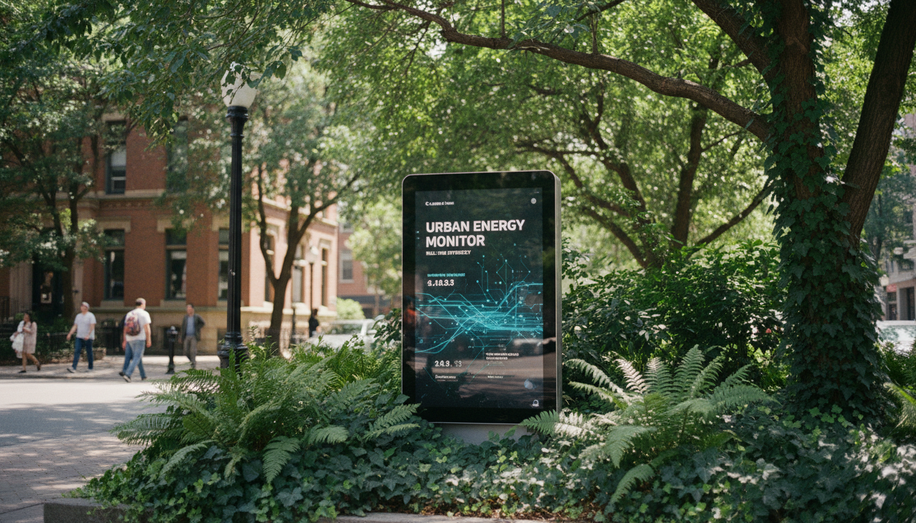

In the bustling urban landscapes where digital out-of-home (DOOH) networks illuminate city streets and transit hubs, a quiet revolution is underway: greening the grid. As advertisers grapple with mounting pressure to align campaigns with environmental imperatives, DOOH is emerging as a leader in sustainable media, leveraging energy-efficient technologies and renewable sources to slash carbon footprints while maintaining high-impact visibility.
DOOH’s inherent advantages stem from its digital nature, which eliminates the waste associated with traditional out-of-home formats. Static billboards demand printed vinyls that are produced, transported, and discarded after short lifecycles, generating substantial material waste and emissions. In contrast, DOOH screens deliver content instantaneously via software updates, cycling through multiple ads on a single display without physical interventions. This dynamic capability not only reduces resource consumption but also optimizes energy use by tailoring brightness and playback to real-time conditions like ambient light or audience density. A 2023 KPMG report underscores this edge, confirming OOH—particularly DOOH—boasts the lowest carbon impact per impression among major media channels, thanks to its one-to-many communication model that avoids the energy-intensive personalization of digital one-to-one platforms.
Energy efficiency forms the cornerstone of these sustainable practices, with light-emitting diode (LED) technology at the forefront. LEDs consume far less power than legacy lighting systems while delivering superior brightness and longevity, directly translating to lower operational costs and emissions for network operators. Many DOOH providers now schedule screens to power down during off-peak hours, such as nighttime in low-traffic zones, further curtailing unnecessary draw from the grid. Industry leaders like Pearl Media exemplify this shift, deploying LED billboards that integrate smart controls to modulate energy based on environmental factors, proving that high-visibility advertising need not compromise ecological responsibility.
Renewable power sources are accelerating this transformation, powering screens with solar panels, wind turbines, and green energy suppliers. Solar-powered DOOH installations, increasingly common on rooftops and highways, harness daylight to operate independently of fossil fuel grids, minimizing transmission losses and peak-demand strains. In 2026, as electric vehicle adoption surges, DOOH networks at charging stations—often near retail clusters—are tapping into on-site solar arrays to run displays, creating symbiotic ecosystems where advertising funds green infrastructure. Media owners are also adopting electric fleets for maintenance and sourcing power from certified renewable providers, aligning operations with net-zero ambitions. These innovations resonate with eco-conscious consumers, who report favoring brands that demonstrate authentic sustainability— a sentiment amplified by DOOH’s ability to showcase real-time data on energy savings, as seen in Tesla’s campaigns promoting solar solutions via dynamic billboards.
Artificial intelligence (AI) and data analytics are supercharging these efforts, enabling predictive energy management. AI algorithms analyze weather patterns, traffic flows, and historical usage to preemptively dim screens or shift to low-power modes, potentially cutting consumption by double digits. Programmatic platforms extend this intelligence to campaigns, automating placements on the most efficient screens and integrating with IoT sensors for granular control. As DOOH evolves into smart city infrastructure, hyper-local targeting—triggered by events, demographics, or even weather—ensures messages land precisely, maximizing impressions per watt and reducing overall network runtime.
Yet challenges persist. While DOOH accounts for under 3.5% of advertising’s total carbon footprint, scaling networks amid urbanization demands vigilant innovation to avoid rebound effects from denser deployments. Conflicting data on exact savings highlights the need for standardized metrics; some studies emphasize per-impression efficiency, while others call for lifecycle assessments including manufacturing. Forward-thinking operators counter this by prioritizing recyclable components in LED builds and partnering with green certification bodies.
Looking to 2026 and beyond, sustainability defines DOOH’s competitive edge. Projections show DOOH comprising over 40% of outdoor ad spend, driven by brands prioritizing carbon-neutral campaigns. Initiatives like solar billboards in high-traffic corridors and AI-optimized grids position the medium as a catalyst for broader environmental goals, from urban decarbonization to consumer education. Advertisers integrating DOOH with mobile retargeting not only boost ROI—lifting store visits by up to 127%—but also amplify messages on resilience and renewables.
Ultimately, greening the DOOH grid proves that effectiveness and responsibility can coexist. By embracing LED efficiency, renewables, and intelligent management, the industry is not just reducing its footprint but redefining advertising as a force for planetary good, one illuminated screen at a time.