
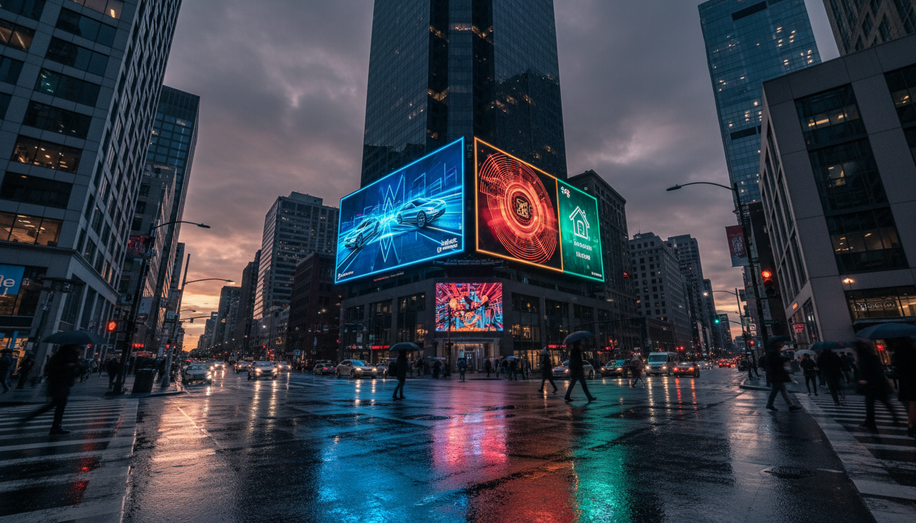

In the dynamic landscape of programmatic Digital Out of Home (DOOH) advertising, predictive analytics has emerged as a transformative force, enabling brands to forecast campaign performance with unprecedented accuracy. By harnessing machine learning and vast datasets on audience movements, real-time conditions, and historical trends, advertisers can anticipate behaviors, refine ad placements, and predict outcomes before campaigns even launch.
Programmatic DOOH, which automates the buying, selling, and delivery of digital outdoor ads through platforms akin to those used in digital display, already offers speed and flexibility over traditional static billboards. Predictive modeling elevates this further, layering AI-driven forecasts onto the process. Advertisers input data on foot traffic, demographics, weather patterns, and events, allowing algorithms to simulate scenarios and recommend optimal screen selections, timing, and creative variations. For instance, a global coffee chain analyzed commuter patterns near train stations to predict peak morning rushes, deploying breakfast ads that drove a 30% increase in nearby store visits.
This predictive capability stems from the integration of historical campaign data with live feeds, such as geolocation and mobility insights, processed by machine learning models that identify patterns humans might overlook. In programmatic ecosystems, these models operate within demand-side platforms (DSPs), where bids are placed in real time but informed by forward-looking simulations. A beverage brand, for example, used weather-triggered predictions to shift messaging toward cold drinks during anticipated heatwaves, resulting in a 25% sales uplift on targeted days. Such adjustments happen dynamically, minimizing wasted impressions and maximizing relevance.
Forecasting campaign performance is perhaps the most compelling application. Rather than relying on post-campaign metrics, predictive analytics provides pre-launch ROI projections by modeling variables like audience dwell time, engagement rates, and conversion likelihood. A car manufacturer targeting electric vehicle enthusiasts selected screens in high-adoption zones based on these forecasts, achieving 40% better ROI than prior efforts. Platforms like those from Confirm Media supply real-time dashboards that feed into these models, verifying proof-of-play and audience interactions to refine predictions iteratively.
Machine learning enhances this by continuously learning from outcomes, creating self-improving loops. In one fitness app campaign, predictive tools pinpointed top-performing locations for DOOH screens, then synced with mobile retargeting for users who engaged, boosting downloads by 50%. This cross-channel synergy is a hallmark of modern programmatic DOOH, where forecasts bridge outdoor impact with digital attribution, tracking foot traffic lifts or app interactions in real time.
Yet implementation demands quality data foundations. Advertisers must aggregate accurate inputs—screen performance, audience demographics, external triggers like events or sports scores—from multiple sources. AI then builds models to forecast trends, such as commuter flows during rush hour or holiday shopping surges. Challenges persist, including data privacy regulations and the need for interoperable platforms, but advancements in federated learning and anonymized datasets are addressing these.
The benefits extend to cost efficiency. By predicting high-ROI slots, brands allocate budgets precisely, avoiding overbidding on underperforming inventory. Programmatic DOOH’s automation reduces manual negotiations, while predictive layers ensure ads trigger contextually—sunny days for beachwear, rain for umbrellas—driving engagement without guesswork. Measurement has also evolved; advanced reporting ties DOOH exposure to downstream actions, like in-store visits or online searches, validating forecasts against reality.
Looking ahead, predictive analytics in programmatic DOOH promises hyper-personalization and seamless omnichannel experiences. Imagine retail ads that dynamically showcase trending holiday items based on predicted shopping patterns in specific locales, or campaigns that anticipate audience shifts across DOOH, mobile, and CTV for unified storytelling. AI-powered dynamic content could even adjust creatives for moods inferred from crowd density or time of day.
As 2026 unfolds, with AI technologies maturing rapidly, this fusion is redefining out-of-home advertising. Brands embracing predictive modeling not only optimize current campaigns but gain a competitive edge in forecasting consumer journeys. The result? Campaigns that don’t just react to the world but shape it, delivering measurable impact in an increasingly data-rich environment. Early adopters report sustained gains in relevance and returns, signaling that predictive analytics is no longer optional—it’s the new standard for programmatic DOOH success.