
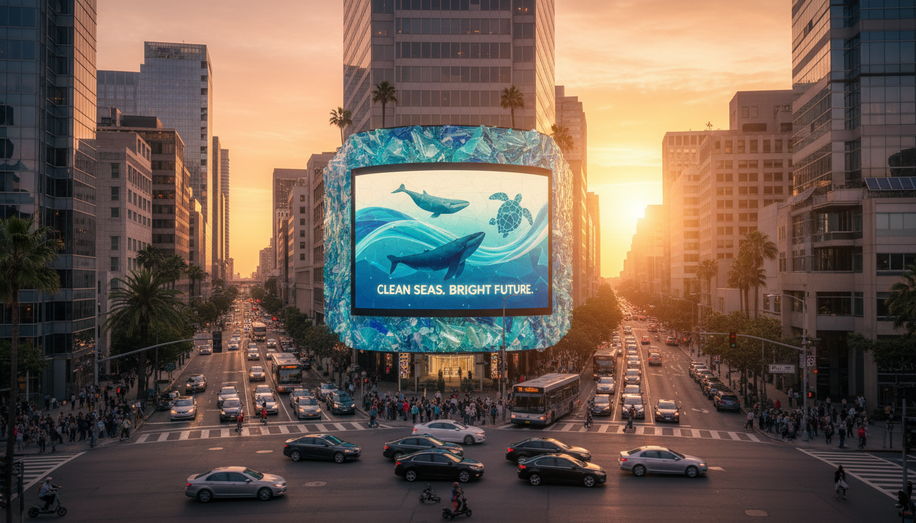

The outdoor advertising industry, long criticized for its environmental toll, is undergoing a profound transformation through the adoption of sustainable materials and innovative practices. Billboards once clad in non-biodegradable vinyl are now giving way to eco-friendly alternatives that slash waste and carbon emissions while maintaining eye-catching visibility. Driven by stricter regulations, consumer demand for green branding, and technological leaps, companies are redefining out-of-home (OOH) campaigns to align with planetary health without sacrificing impact.
At the forefront of this shift are eco-friendly materials that replace traditional plastics and papers. Recycled paper, now used for 100% recyclable posters, has become a staple, dramatically cutting deforestation and landfill contributions. Brands are swapping solvent-based inks for water-based or eco-solvent varieties, which minimize toxic emissions during printing and degrade more harmlessly post-campaign. PVC-free polyethylene films and biodegradable fabrics offer durable yet recyclable options for banners and wraps, enduring harsh weather while ensuring easy disposal. Modular billboard components, designed for reuse across multiple campaigns, further reduce material waste by allowing panels to be repurposed rather than discarded.
Innovations like synthetic papers are proving particularly game-changing. These durable, wood-pulp-free sheets—often fully recyclable—are ideal for posters, transit ads, and street banners, especially in challenging conditions like monsoons. Their longevity means fewer reprints, less waste, and repeated use for events, outperforming laminated paper in sustainability metrics. Similarly, nonwoven products such as Walki®Billboard, made from PP or PET coatings, provide mid-term outdoor durability for roll-up stands and panels, blending strength with eco-responsibility. Bamboo, recycled metal, and even living plants are emerging as novel substrates; Coca-Cola’s “Living Billboard” in the Philippines, for instance, featured live greenery that absorbed CO2 while promoting the brand.
Energy efficiency complements these material advances, powering displays with minimal ecological strain. LED lighting dominates, consuming far less electricity than traditional bulbs and boasting longer lifespans that curb replacement waste. Solar-powered billboards, harnessing renewable energy, eliminate grid dependency; PepsiCo’s fully solar-fueled installation exemplifies how these setups cut costs and emissions in high-traffic areas. Motion-sensing technology activates lights only when passersby are present, while smart energy management dims or shuts off screens during off-peak hours. Next-generation LED screens, like those from Urban Led and Marketing Espectacular, integrate clean energy for pixel-perfect displays that evolve content dynamically.
Digital OOH takes sustainability further by virtually eliminating physical media. Remote content updates on screens mean no reprinting, slashing paper and ink use entirely. Pearl Media and others champion this approach, proving digital billboards deliver high-impact messaging with footprints lighter than static alternatives. Augmented reality (AR) and interactive elements—via QR codes, NFC, or touchscreens—overlay digital experiences on the real world, fostering engagement without added materials. AI-driven analytics optimize ad placements, targeting audiences precisely to minimize overproduction and energy squander.
Yet challenges persist in balancing visibility with virtue. Eco-materials must withstand wind, rain, and UV without fading, and renewable setups require upfront investment. Industry leaders counter this by innovating hybrid solutions: recyclable signage paired with LED illumination ensures brands stand out while shrinking their carbon profile. Local sourcing of materials bolsters these efforts, trimming transport emissions and supporting community economies.
Real-world adoption underscores the feasibility. Clece OOH deploys PVC-free banners and eco-vinyls alongside solar LEDs, proving large-format advertising can be responsibly scaled. A Lot Media highlights how interactive AR reduces print reliance, engaging tech-savvy consumers memorably. Vigyapanmart advocates reusable modules and solar displays for brands seeking greener campaigns that resonate.
Looking ahead, 2025 trends signal acceleration. Solar-digital hybrids and AI-optimized networks promise even lower impacts, with biodegradable substances evolving for full lifecycle neutrality. As consumers favor eco-aligned brands—studies show preference for sustainable advertisers—the OOH sector’s pivot isn’t optional; it’s a competitive imperative.
This green revolution positions OOH not as an environmental burden, but as a beacon of innovation. By embracing these materials and methods, the industry forges a path where promotion and preservation coexist, captivating audiences while safeguarding the planet.