
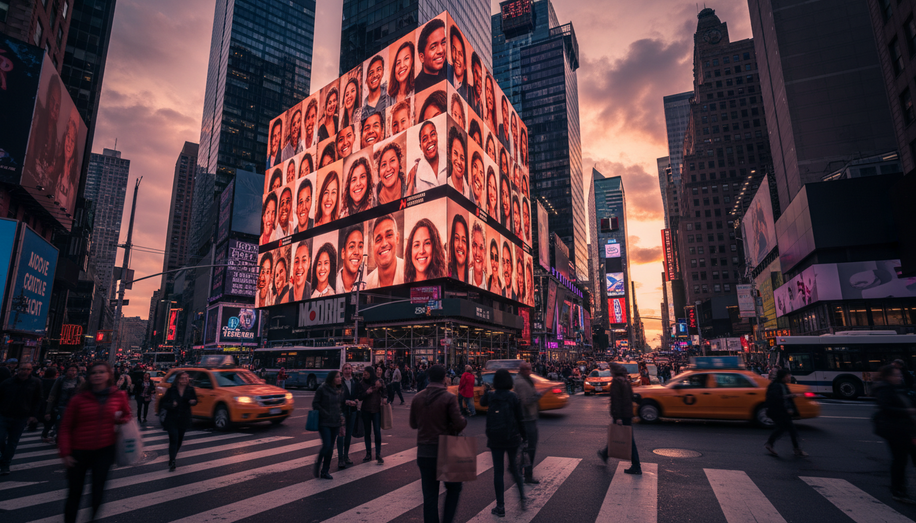

In the bustling corridors of urban life, where out-of-home (OOH) advertising commands attention from millions daily, brands are increasingly turning to inclusive strategies to reflect the diverse tapestry of society. These campaigns transcend mere visibility, fostering genuine connection by showcasing underrepresented voices, abilities, and identities through innovative OOH formats. By integrating digital screens, print wraps, and sensory elements, companies like Bupa and Nike demonstrate how OOH can champion diversity, driving both social impact and commercial success.
Consider Bupa’s “This Is Health” campaign, a collaboration with OOH powerhouse JCDecaux that transformed London’s St. Pancras International Underground tunnel into an immersive showcase of health’s multifaceted reality. Giant wall wraps, dynamic digital six-sheet screens, and interactive mirrors invited commuters to envision themselves in narratives of wellness, challenging narrow stereotypes. Crucially, the execution prioritized accessibility: typefaces optimized for readability, braille inscriptions on handrails, and spatial audio narrations guided visually impaired passersby. Photographer Sonny McCartney, an amputee, captured authentic everyday moments, ensuring disabled perspectives were not tokenized but central. Angelique Waker, Bupa’s director of brand marketing, emphasized this authenticity: the campaign aimed to reflect life with disabilities through expert collaboration, marking a step toward inclusive health representation. This multi-sensory approach not only amplified reach but also built empathy, proving OOH’s power to make abstract inclusivity tangible.
Brands in the outdoor industry have similarly leveraged OOH to broaden participation in traditionally exclusive spaces. The North Face ignored backlash to partner with drag queen Pattie Gonia for events across U.S. states, using billboards and activations to declare the outdoors welcoming for LGBTQ+ communities. This aligned with broader goals of resilience and climate awareness, creating safe gathering points that emphasized universality over division. Meanwhile, coalitions like Diversify Outdoors have employed OOH alongside social media under #DiversifyOutdoors, rallying activists and influencers since 2017 to pledge industry-wide diversity commitments. Such efforts extend OOH’s role from promotion to community-building, inviting underrepresented groups into adventures once gated by assumption.
Fashion and sportswear giants have elevated these tactics with bold, context-aware executions. Nike’s “Fear the Lionesses” OOH campaign in the UK celebrated the women’s football team with posters radiating unapologetic confidence, fusing cultural pride and gender inclusivity in high-traffic areas. It captured a national moment without pandering, resonating through its timeliness. In a parallel vein, Nike’s FlyEase initiatives, co-designed with athletes with disabilities and rolled out across Japan and Australia by 2025, used adaptive digital OOH to highlight innovative footwear. Responsive screens adjusted messaging in real-time, mirroring the brand’s commitment to redesigning for all abilities. These examples underscore a key lesson: inclusive OOH thrives on cultural literacy, embedding diversity seamlessly rather than as an afterthought.
Even luxury and everyday brands are adapting. H&M, post its 2018 scandal, rebuilt trust via OOH collaborations with Black creators and London photographers, depicting real communities on billboards that felt lived-in and aspirational. Lush’s “Scent of My Culture” extended this ethos, with OOH visuals tying perfumers from Bahia, Kerala, and Marrakech to global fragrances, evoking personal heritage amid urban hustle. In the U.S., REI has woven inclusivity into OOH by promoting recycled gear programs and community clean-ups, targeting diverse demographics with messaging that underscores shared environmental stewardship. Columbia’s sizing inclusivity campaigns on outdoor panels further democratize adventure gear, signaling that the wilds belong to every body type.
Technological advancements amplify these strategies’ potency. Digital OOH (DOOH) enables hyper-personalization, as seen in New Balance’s real-time responsive ads celebrating Dutch athlete Femke Bol’s victory. Screens shifted from motivational pre-race creatives to triumphant post-win visuals, scaling effortlessly across formats while tying into national pride. Weather-triggered activations, like Aperol’s summer spritz promotions above 66°F near social hubs, show how data-driven OOH can intersect with inclusive moments—extending reach to varied audiences at peak relevance. Hybrid print-digital setups, such as Ocean Outdoor’s Kinder Bueno installations with life-sized bars atop backdrops in UK cities, blend whimsy with broad appeal, targeting Gen Z and millennials without alienating others.
Yet success demands more than visuals; it requires partnership and accountability. JCDecaux’s work with Uber and Bupa highlights OOH specialists’ role in multi-media inclusivity, from braille integrations to audio storytelling. LEGO’s “My Identity, My Brick,” co-created globally with families, used playful OOH to sculpt gender and body diversity through brick motifs, turning public spaces into interactive affirmations. The North Face’s persistence amid criticism exemplifies resilience: by doubling down on authentic collaborations, brands convert skeptics into advocates.
Ultimately, inclusive OOH campaigns redefine advertising as a mirror of society, not a mold. They boost brand loyalty—studies show diverse representation enhances consumer trust—while sparking conversations that echo beyond the billboard. As urban landscapes evolve, brands prioritizing lived experiences over lip service will lead, proving that true visibility starts with seeing everyone. In an era demanding authenticity, OOH stands ready to illuminate diversity’s full spectrum.