
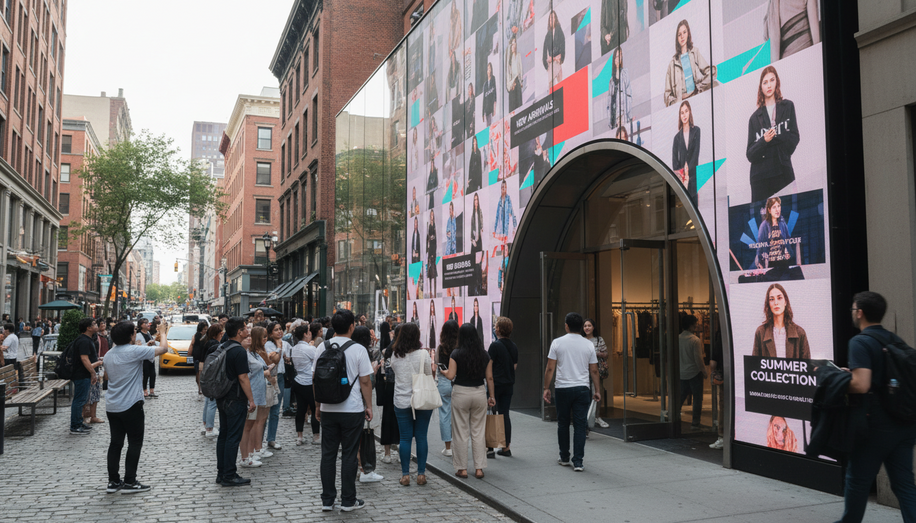

Retailers are increasingly turning to out-of-home (OOH) advertising to blur the lines between the street and the store, creating seamless experiences that draw crowds inside and amplify in-store magic. In 2026, with digital screens proliferating in high-traffic zones and advanced data integration enabling hyper-targeted messaging, OOH has evolved from mere visibility plays into powerful tools for transforming retail spaces. Strategic placements near shopping districts, transit hubs, and malls not only boost foot traffic but also prime shoppers with personalized promotions that resonate the moment they cross the threshold.
Consider the retail environment itself, where OOH shines brightest. Digital displays in shopping centers and at point-of-sale kiosks guide customer journeys, flashing flash sales, event announcements, and wayfinding cues that turn passive passersby into purposeful visitors. Gas station screens or mall entrances capture consumers at critical buying moments, delivering timely offers that convert impulse into action. Retail media networks (RMNs) are redefining this space, with in-store screens near checkouts and product displays influencing decisions right at the point of purchase—projected to drive 55.9% of total digital OOH growth between 2025 and 2029. By syncing these with programmatic platforms, retailers gain precision akin to online ads, optimizing campaigns based on real-time shopper behavior and foot traffic patterns.
Location strategy remains the cornerstone, amplified by 2026’s tech advancements. High-dwell areas like bus shelters adjacent to popular stores or retail parks maximize exposure, with data on commuter routes and audience segments ensuring messages hit the right eyes. Proximity targeting places screens near stores, events, or points of interest, tailoring content to the surroundings—think weather-triggered discounts on rainy days or event-tied promotions during peak shopping hours. Diversifying formats across large urban billboards, mall elevators, and even gym screens keeps brands omnipresent, embedding them into daily routines and nudging consumers toward nearby retail doors.
Interactivity takes this transformation further, turning OOH into an invitation rather than an interruption. Touch-enabled kiosks at store entrances offer product demos or instant feedback, boosting dwell times by 20 to 40 percent and fostering deeper connections. Augmented reality (AR) overlays on billboards let passersby scan for virtual try-ons or gamified challenges, bridging the physical world to in-store discovery. QR codes and NFC tags on displays drive mobile retargeting, exclusive app offers, or social shares, seamlessly linking outdoor impressions to indoor conversions. A global beverage brand’s AR-enabled billboard, for instance, lifted recall by 30 percent through interactive storytelling that funneled engagement straight to retail partners.
Omnichannel integration elevates these tactics, creating a unified ecosystem where OOH feeds into digital and social channels. Geofencing retargets billboard viewers via mobile as they approach stores, while beacons in retail zones track and personalize the handoff. During high-energy events like the 2026 World Cup, real-time score integrations on venue screens or nearby retail displays spark emotional ties, driving surges in foot traffic with multisensory flair—scents, sounds, and holographics that generate three to four times more interaction than static ads. Retailers leveraging this report stronger recall, immediate purchases, and long-term loyalty, proving OOH’s role in omnichannel mastery.
Dynamic content personalization seals the deal, using real-time data on time, weather, demographics, or traffic to swap messaging instantly. A screen near a mall might shift from lunch specials to evening sales, aligning with local rhythms and commuter flows. In-store extensions via RMNs allow retailers to push aisle-specific promotions, turning the entire shopping environment into a responsive canvas. This relevance not only enhances the in-store experience—smoother navigation, urgent deals, immersive demos—but also measures ROI through foot traffic lifts and sales attribution, areas where OOH now rivals digital precision.
Case studies from 2025 and 2026 underscore the impact. Retailers deploying location-based offers saw significant foot traffic spikes during peak periods, while city-wide campaigns with inclusive, dynamic designs earned accolades for blending creativity with accessibility. As OOH spending climbs, fueled by digital transformation and in-store placements, brands prioritizing these tactics are outpacing competitors. Expanding into unconventional venues like movie theaters or vehicles further embeds retail messaging into lifestyles, swarming high-traffic zones with coordinated takeovers that culminate in store visits.
Ultimately, these OOH tactics redefine retail spaces as extensions of the urban pulse. By strategically placing interactive, data-driven displays that guide, engage, and convert, retailers craft experiences where the journey from street to shelf feels intuitive and irresistible. In an era of fragmented attention, this fusion of physical presence and digital smarts not only drives crowds but transforms one-time browsers into loyal advocates, proving OOH’s enduring power to make retail irresistible. Mastering this new frontier of OOH requires sophisticated tools that can connect data to actionable strategies and measurable outcomes. Blindspot empowers retailers to execute hyper-targeted, data-driven OOH campaigns with unparalleled precision, leveraging programmatic DOOH campaign management, advanced audience measurement, and robust ROI attribution to ensure every impression translates into a strategic step towards conversion and lasting loyalty. Discover how at https://seeblindspot.com/.