
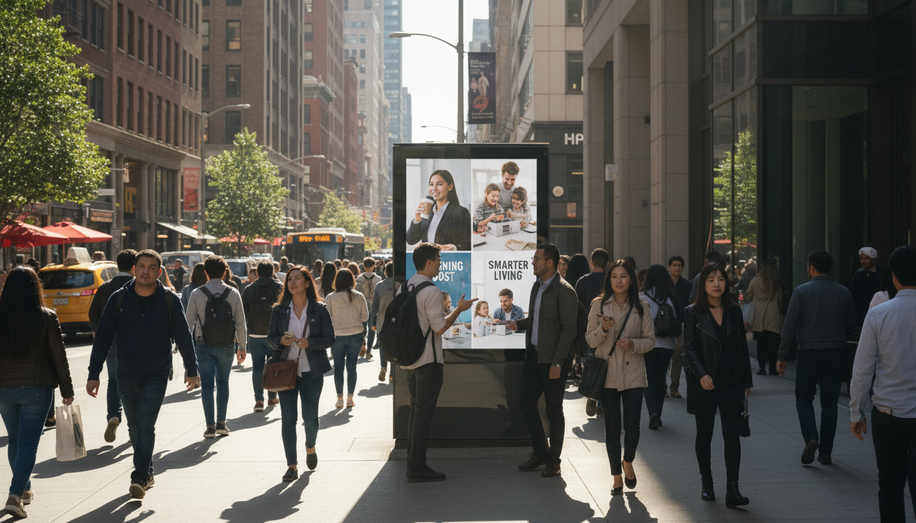

In the evolving landscape of out-of-home (OOH) advertising, behavioral targeting has emerged as a game-changer, enabling brands to harness data analytics for hyper-relevant messaging that resonates with consumers on the move. By analyzing patterns such as location history, real-time weather, traffic flows, and even proximity to competitors, marketers can transform static billboards into dynamic tools that anticipate and influence consumer actions, driving measurable engagement and sales. This data-driven precision bridges the gap between traditional OOH’s broad reach and digital advertising’s personalization, offering brands a competitive edge in crowded urban environments.
At its core, behavioral targeting in OOH relies on digital out-of-home (DOOH) platforms equipped with sensors, GPS integration, and AI analytics to tailor content in real time. For instance, advertisers can use geofencing—virtual perimeters around specific locations—to trigger customized ads when consumers enter defined zones, such as near rival stores or event venues. This technique draws from mobile device data, IP addresses, and location patterns to predict routines like daily commutes or shopping habits, allowing billboards to display messages aligned with immediate context. Weather triggers add another layer, adjusting creatives based on local conditions; a sudden rain might prompt ads for umbrellas or cozy beverages, boosting relevance and conversion rates.
Burger King’s 2018 Whopper Detour campaign exemplifies this strategy’s potency. By geofencing 14,000 McDonald’s locations across the U.S., the brand displayed provocative digital billboards urging nearby app users to claim a one-cent Whopper, complete with directions to the closest Burger King. The stunt generated 1.5 million app downloads in just nine days, earned a Grand Prix at Cannes Lions, and showcased how location-based behavioral insights can hijack competitor foot traffic for explosive results, as noted by then-CMO Fernando Machado. Similarly, Guinness leveraged weather data in U.S. cities to swap billboard messages—promoting warming stout on cold days—which correlated with increased pub visits and sales, proving environmental cues can directly sway consumer behavior.
These successes underscore the broader advantages of integrating behavioral data into OOH. Platforms like Blip Billboards enable advertisers to select inventory based on audience movement patterns, timing messages to peak traffic or events, and optimizing budgets with live metrics such as impressions and CPM. Betterment, a financial services firm, targeted urban professionals in high-traffic districts, yielding surges in brand recognition, app engagement, and new sign-ups—one key billboard outperformed averages dramatically, prompting campaign extensions. Expedia took interactivity further at U.S. airports, embedding QR codes on DOOH screens linked to departure-specific deals; the pilot delivered high traveler engagement and habit insights, expanding to more locations.
Beyond case studies, brands can operationalize behavioral targeting through systematic data pipelines. Start by aggregating consumer signals: GPS for precise tracking, historical patterns for routine prediction, and demographic overlays for segmentation. Tools analyze time-of-day traffic, local events, and even social media behaviors—like frequent engagement with hiking posts—to refine targeting. A/B testing extends this rigor to OOH; rotating creatives on digital screens reveals which messages drive scans or visits, much like digital optimization. Integrating QR codes or NFC bridges physical ads to mobile, capturing first-party data on viewer preferences for future refinements.
For tourism and entertainment sectors, the approach shines brightest. DOOH campaigns sync with travel peaks or weather shifts to entice tourists, while venues promote events based on audience flows, increasing attendance through timely relevance. An outdoor gear brand might target adventure enthusiasts via lifestyle data, serving ads near trails during peak seasons, even without recent searches. B2B marketers track professional behaviors, like site visits or email opens, to position hoardings near offices or events frequented by decision-makers.
Challenges persist, including data privacy regulations and verification of metrics like Nike’s marathon geofencing efforts, which remain under review for precise impacts on runners and sales. Yet, advancements in DOOH mitigate these, offering anonymized aggregates and opt-in tracking. Brands must prioritize ethical sourcing—focusing on consented mobile data and contextual signals—to build trust.
Ultimately, behavioral targeting elevates OOH from impression-based to action-oriented advertising. As platforms evolve, expect deeper fusion with AI for predictive modeling, where billboards not only react to behaviors but forecast them, ensuring every glance converts. For brands willing to invest in analytics, the outdoor space is no longer a shot in the dark—it’s a spotlight on the consumer journey.