
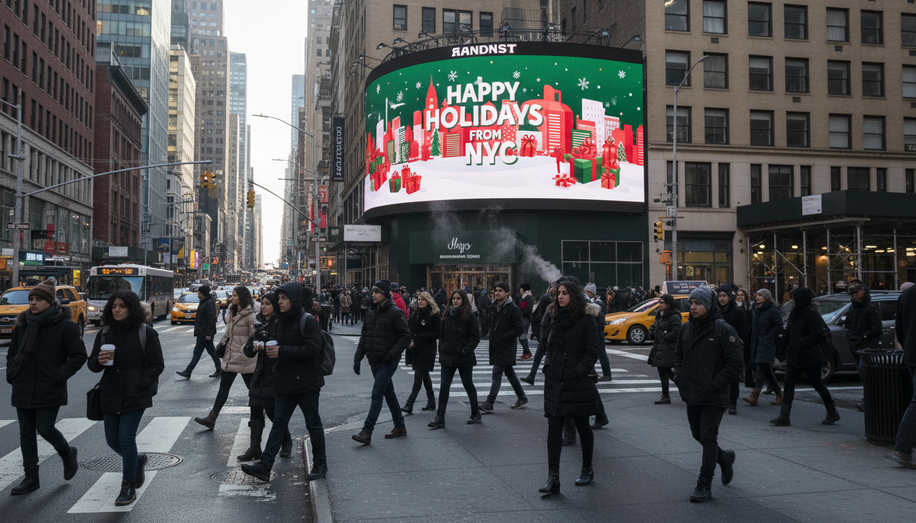

Seasonal shifts have long dictated consumer behavior, but in 2026, out-of-home advertising is entering a new era where seasonal alignment has become essential to campaign success. As audiences increasingly demand contextually relevant messaging in public spaces, brands that strategically time their OOH efforts around seasonal changes are discovering measurable advantages in engagement and ROI.
Spring exemplifies this seasonal opportunity. The season triggers a fundamental psychological reset for consumers, shifting mindsets from winter dormancy to renewal and activity. Brands that recognize this moment can capitalize on heightened consumer receptivity by promoting travel experiences, seasonal product launches, and lifestyle-enhancing purchases. Dynamic digital displays enable real-time alignment with spring-specific occasions—Mother’s Day, Memorial Day, and Earth Day—transforming billboards into living campaign tools that reflect current moments rather than static advertisements. When retailers align messaging with the season’s energy, they invite stronger emotional connections and engagement by meeting consumers where they are: on the move and ready for new beginnings.
The strategic importance of seasonal alignment extends beyond messaging alone. Location strategy itself must adapt to seasonal patterns. As urbanization accelerates and consumer mobility increases, high-traffic locations—city centers, transit hubs, and retail zones—experience shifting foot traffic patterns throughout the year. Winter commutes differ fundamentally from summer routes; spring break travel alters pedestrian flows; holiday seasons concentrate audiences in retail areas. Successful campaigns analyze these patterns through foot traffic and dwell time data, allowing brands to prioritize locations with maximum seasonal exposure. A retailer promoting winter coats requires different placement than one launching summer sandals, yet many brands fail to adjust their location strategies accordingly.
Real-time data capabilities have transformed seasonal planning from a blunt instrument into a precise tool. Weather-triggered advertising represents perhaps the most direct seasonal optimization available. Beverage brands can increase cold drink ads during heatwaves; retailers can promote flash sales when foot traffic surges during peak shopping seasons; travel brands can spotlight beach destinations as weather warms. This agility ensures that outdoor advertising remains relevant and cost-effective, delivering messages when and where they matter most. The flexibility of digital out-of-home (DOOH) enables brands to execute seasonal pivots without the delays inherent in traditional static billboard production.
The 2026 advertising landscape increasingly rewards brands that recognize OOH’s role in a seasonally conscious media mix. As digital channels face mounting challenges—fragmented audiences, declining trust, privacy concerns, and ad avoidance—out-of-home advertising is gaining ground precisely because it operates outside these friction points. Billboards offer clarity, presence, and reliability when other channels saturate and fatigue audiences. Seasonal campaigns deliver this value most effectively when they align outdoor messaging with moments when consumers are most receptive.
However, seasonal effectiveness requires year-round planning discipline. Brands cannot simply activate during obvious peak seasons; they must develop rolling seasonal calendars that account for regional variations, product lifecycles, and cultural moments specific to their categories and audiences. An outdoor equipment brand faces entirely different seasonal priorities than a fashion retailer, yet both operate within predictable seasonal rhythms that reward strategic anticipation.
The convergence of several 2026 trends amplifies seasonal strategy’s importance. Hyper-local targeting enables brands to customize seasonal messages for specific neighborhoods and climates. Immersive technologies like augmented reality allow seasonal creative to evolve dynamically throughout campaigns. Smart city integration facilitates real-time, data-driven seasonal delivery. Together, these capabilities transform seasonal OOH from a calendar-based exercise into a continuous, responsive practice grounded in audience behavior and environmental conditions.
As 2026 unfolds, the most successful OOH campaigns will be those that view seasonality not as a limitation but as a strategic framework for relevance. By aligning creative, placement, messaging, and technology with seasonal consumer psychology and behavior patterns, brands can transform outdoor advertising from a static presence into a dynamic force that captures attention precisely when audiences are most receptive and engaged.